After countless pages of books, hours of sermons, and endless debates, one haunting truth remains: any attempt to create lasting meaning in a meaningless universe is ultimately doomed to fail. We are creatures who crave purpose, yet we find ourselves in a world that is silent and indifferent. Confronted with this contradiction, we face three choices: to end our lives, to surrender to a higher power, or to choose a third path—to rebel.
He was a king once—clever, arrogant, unwilling to die on anyone else’s terms. Sisyphus tricked the gods, twice. He bound Death in chains, delayed his own end, and even managed to slip back into the world of the living. But the gods do not forget. For his defiance, they crafted a punishment of perfect cruelty: not pain, not fire, not torture—but labor without end.
Each morning, Sisyphus walks to the foot of a mountain.
Each morning, he puts his shoulder to the stone.
He pushes with all his strength. He strains, sweats, bleeds.
The boulder moves—slowly, steadily—inch by inch, up the slope.
Hours pass. The summit nears. The end seems within reach.
But just as he arrives—just as the peak is close enough to touch—
the rock slips.
It rumbles.
And it falls.
And then—back to the beginning.
There is no finish. No relief. No meaning.
Only the endless repetition of effort without result.
And Sisyphus? He is not a fool. He knows.
He knows the stone will fall again.
He knows the climb will begin anew.
And still—he bends down, places his hands on the rock, and pushes.
This is not just myth. It’s a mirror.
Because Sisyphus is not alone on that mountain—we are all there with him.
Each morning we rise, we work, we strive. We build relationships, chase dreams, endure routines. We carry hopes to the top of the hill, only to watch them slip back down in the face of death, loss, indifference, or time. And tomorrow, we begin again.
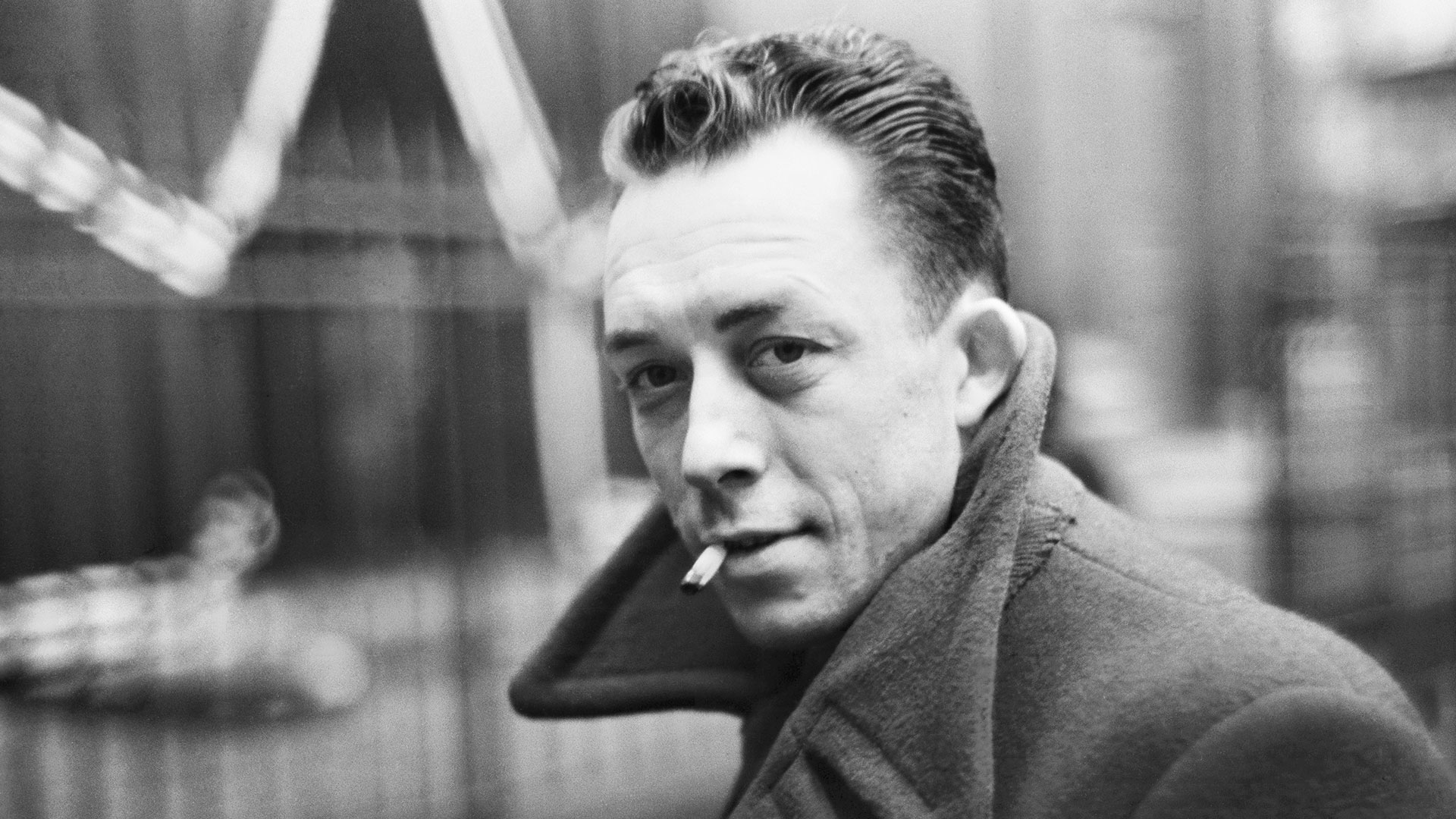
This, for Albert Camus, is the absurd:
Not a mood, not a metaphor—but a condition.
It is born from the confrontation between the human need for meaning and a universe that offers none.
We are creatures who ask questions—Why are we here? What is the point of suffering? What happens after death?
But the world remains silent.
The absurd is not in us, and it’s not in the world.
It’s in the space between—the collision between our longing and the world’s indifference.
We want the universe to explain itself. But it doesn’t.
We want justice, but we find chaos.
We want permanence, but we get decay.
And the more conscious we become of this gap, the more unbearable it feels.
Faced with this silent universe, Camus asks what he calls the only truly serious philosophical question:
“Should I kill myself, or have a cup of coffee?”
It’s a strange way to frame existence—morbid and mundane at once.
But that’s the point. The moment we become aware of the absurd, life becomes a choice. And that choice begins not with meaning, but with survival.
In the face of absurdity, suicide might appear to be a logical choice. If life has no meaning, if every effort collapses into silence, then why endure it at all? Why keep going? Why get out of bed, go to work, fall in love, pay bills, make plans—when all of it will one day disappear?
But for Camus, suicide is not a solution—it is a confession.
It is the act of someone who lacks the courage to face the absurd and instead chooses to escape it.
“But in the end, one needs more courage to live than to kill himself.”
(Albert Camus, A Happy Death)
Choosing coffee, then—choosing life—is not an act of ignorance.
It is an act of defiance.
But where does one find the strength to keep living?
A Leap of Faith
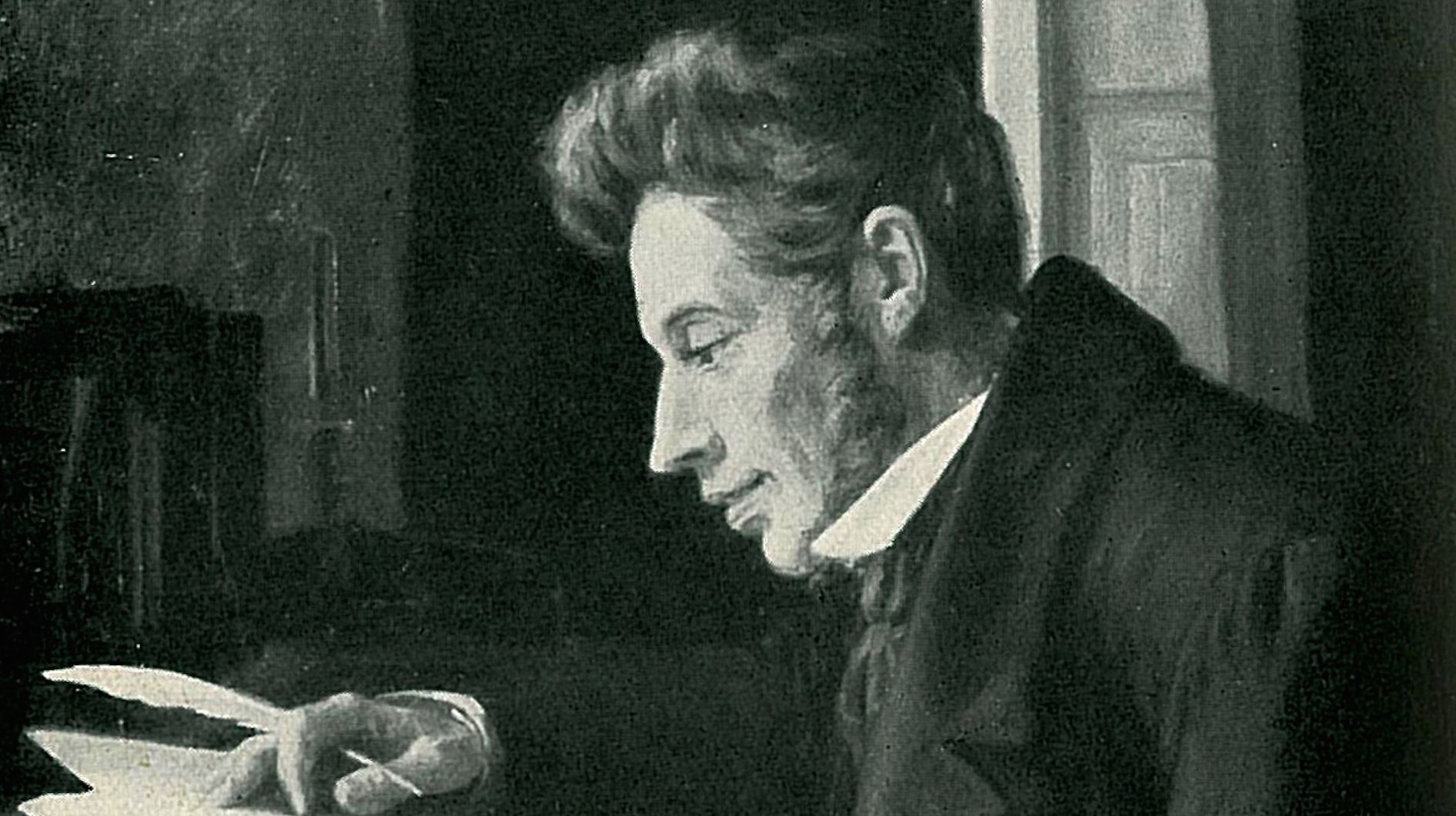
Long before Camus, in the mid-19th century, a Danish philosopher named Søren Kierkegaard offered a different way of confronting life’s uncertainty and paradox. His answer was not rebellion, but a leap of faith.
For Kierkegaard, human beings inevitably face situations that defy logic—moments when reason collapses, and no amount of thought can resolve the tension between what we know and what we must do. In those moments, he believed, we are called to leap—not blindly, but subjectively, into a trust that transcends rational understanding.
In his work Fear and Trembling, Kierkegaard reflects on the biblical story of Abraham, who is asked by God to sacrifice his son Isaac. This act makes no moral sense. It contradicts ethics, love, and reason. And yet Abraham obeys—not because he understands, but because he believes. His faith becomes a personal, inward act—one that cannot be explained, only lived.
This is the leap: not a conclusion drawn from evidence, but a commitment made in uncertainty. It is not rational. It is not provable. It is, in Kierkegaard’s view, the only authentic way to live when life itself cannot be fully understood.
“It is really true what philosophy tells us, that life must be understood backwards. But with this, one forgets the second proposition, that it must be lived forwards… that life at any given moment cannot really ever be fully understood.”
(Søren Kierkegaard, Journals, 1843)
For Kierkegaard, faith is not comfort—it is courage. It is the choice to live on despite not knowing why.
The Absurd Hero
Though Kierkegaard’s thought left a deep mark on existentialist and absurdist philosophy, Camus ultimately rejected the leap of faith as a solution to life’s absurdity. Just as he dismissed suicide as an escape from reality, he saw religious faith as another kind of flight—what he famously called a “philosophical suicide.”
To leap into belief, for Camus, was to abandon reason at the very moment it was needed most. It meant silencing the absurd by invoking a higher power—some transcendent order that would rescue us from uncertainty. But to do that, Camus argued, is to betray the absurd rather than face it. It’s a comforting illusion. A refusal to stand in the storm with open eyes.
Camus rejected the idea that any force—divine, cosmic, or otherwise—could provide life with inherent meaning. There is no script, no savior, no secret design.
There is only the world as it is: mute, indifferent, and vast.
And yet, he did not despair.
Instead, he proposed something radical: absurd rebellion.
Not rebellion in the political sense, but a quiet, existential defiance. A refusal to escape, to explain, or to retreat into false hope.
To rebel, in the face of the absurd, is to live without appeal.
It is to say: “Yes, the world has no meaning—and I will live in it anyway.”
This is not nihilism. It is not resignation.
It is a kind of freedom—fierce, ungrounded, but honest.
To accept the absurd is to begin again, not with faith, but with clarity.
For Camus, to live without appeal—to reject suicide, reject salvation, and still continue—is an act of rebellion. But rebellion alone is not enough. He asks: What does it look like to live fully in the absurd?
Enter the absurd hero.
The absurd hero does not deny the futility of life. He does not pretend that suffering has meaning or that the universe offers answers. Instead, he stares the absurd in the face—and chooses to live anyway. Not with hope, but with defiant clarity. Not for meaning, but for presence. His courage is not found in illusion, but in the decision to continue, moment by moment, without justification.
This is where Camus returns to Sisyphus—not just as a story, but as a metaphor for the human condition.
Sisyphus knows the stone will fall. He knows the climb is endless. And yet, he continues. Not because he expects redemption—but because he refuses to surrender. His punishment becomes his rebellion. His struggle becomes his dignity.
“I leave Sisyphus at the foot of the mountain. One always finds one’s burden again. But Sisyphus teaches the higher fidelity that negates the gods and raises rocks. He too concludes that all is well. This universe henceforth without a master seems to him neither sterile nor futile. Each atom of that stone, each mineral flake of that night-filled mountain, in itself, forms a world. The struggle itself toward the heights is enough to fill a man’s heart. One must imagine Sisyphus happy.”
The Myth of Sisyphus, Albert Camus
Happiness, in Camus’ philosophy, is not found in meaning—it is found in awareness. In motion. In choosing to roll the stone, knowing it will fall. In finding joy not beyond life, but within it—precisely because it is fleeting, absurd, and unpromised.
This is the gift of the absurd hero:
To live without why.
To push the stone without hope.
To laugh, knowing the mountain has no summit.
Camus ends where many philosophies begin—with no final answer, no fixed truth, no salvation. He offers no map, only a mirror. And in that mirror, we see not the world as it should be, but the world as it is: cold, indifferent, magnificent, and brief.
To live absurdly is not to abandon meaning—it is to stop chasing it like a prize. It is to walk forward without a destination, knowing the path is all there is. And in that act of rebellion, Camus gives us something rare: not certainty, but clarity. Not peace, but freedom.
The Shadow over Knowledge
In a world where answers are gone, attention becomes sacred.
Where truth is uncertain, honesty becomes rebellion.
And where meaning collapses, we begin again—not with hope, but with courage.
Because if nothing matters, then everything we do matters more.
That is the quiet, burning legacy of absurdism.
A philosophy not of despair, but of resolve.
Not of surrender, but of staying—and choosing, again and again, to live.
But the implications of absurdism don’t end with Camus.
If the universe offers no inherent meaning, if truth is no longer fixed, then what becomes of knowledge itself?
This is where absurdism quietly hands the torch to a new kind of thinking—a movement that rejects grand narratives, challenges claims to objective truth, and views meaning as something constructed rather than discovered.
Where Camus questioned the silence of the universe, these new thinkers began to question the structures we use to explain it—language, history, identity, power.
The absurd opened the door not just to rebellion, but to radical reimagining. If nothing is given, then everything is up for interpretation. Meaning becomes plural. Perspective becomes political. And the question is no longer What is true? but Whose truth is speaking?
References:
- Absurdism Page on Wikipedia
- Chapter 4 of the essay The Myth of Sisyphus, by Albert Camus
- Notes on A Happy Death by Bob Corbett
- Soren Kierkegaard Page on Wikipedia
- Fear and Trembling, Excerpts, translated by L.M. Hollander
>>> Next Article: Postmodernism
 Eksistensialisme.com