
There was a time when philosophy felt certain. The world, it seemed, could be explained through scientific laws. Human existence could be mapped out in neat, logical formulas. But beneath all that progress, something began to feel hollow. It’s in this space that continental philosophy found its voice. Not to reject logic, but to ask what logic had forgotten.
Along with the Enlightenment came a new paradox: The more science explained the universe, the smaller our place within it became. We were no longer the center of creation, but particles in a vast and indifferent system.
Rationality brought clarity—but it also created distance:
Between knowledge and wisdom.
Between the outer world and the inner life.
This tension between what we know and how we feel it gave rise to a different kind of thinking—one less interested in universal formulas, and more concerned with the conditions of being human in a disenchanted world.
Born in 19th-century Europe, continental philosophy emerged as a response to the growing dominance of the analytic tradition, especially in Britain and America.
Where analytic philosophers focused on language and logic, continental thinkers turned to history, society, and subjectivity.
They asked questions that couldn’t be resolved with data:
What does it feel like to live in a world that no longer offers automatic meaning?
What happens when religion, tradition, and even science fail to ease our anxiety?
Where do we turn when the map no longer matches the terrain of our emotional and existential lives?
As Simon Critchley writes:
“The paradox… is that the scientific conception of the world does not close the gap between knowledge and wisdom, but makes us feel it all the more acutely…”
The more we know, the more we feel the absence of meaning.
From Spirit to Struggle: Hegel and Marx on the Movement of History
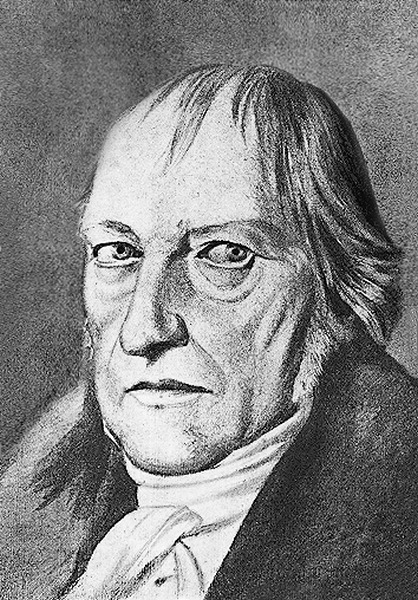
This search for deeper meaning—beyond logic—began with Georg Wilhelm Friedrich Hegel (1770–1831).
For much of early modern thought, truth was treated as something static: discovered, defined, eternal. But Hegel shattered that certainty.
He believed that truth unfolds through contradiction. Reality, he argued, is not fixed—it moves. Through a pattern called dialectics, a thesis meets its opposite, and from their clash, a new synthesis is born.
To Hegel, this wasn’t just a model of argument—it was the engine of history itself. History is not a list of facts, but the evolution of consciousness—the soul of humanity struggling toward self-understanding.
It was a deeply spiritual vision:
We are not just spectators of history. We are part of its unfolding.
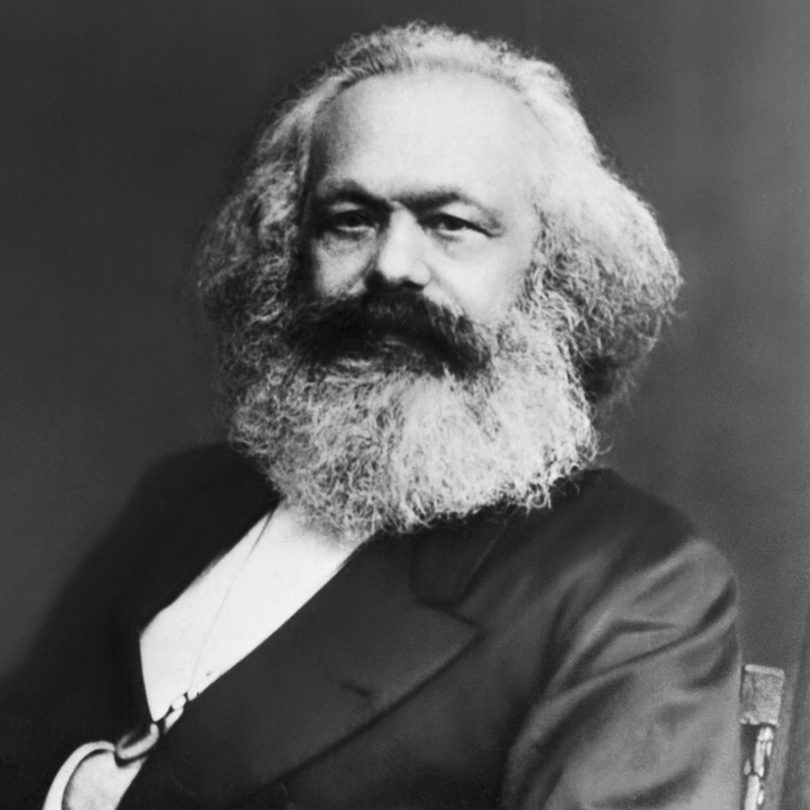
But Karl Marx (1818–1883) saw something else.
He admired Hegel’s method—but he flipped it. History, Marx argued, was not about the evolution of spirit—it was about material struggle. Ideas don’t shape the world—conditions do.
“The history of all hitherto existing society is the history of class struggles.”
While Hegel mapped the movement of freedom, Marx mapped oppression. The factory, not the forum, was the battleground. The laborer, not the philosopher, became the central figure of history.
Philosophy, for Marx, had to leave the university. It was no longer enough to interpret the world—it had to change it.
Together, Hegel and Marx captured the anxiety of modernity—a world in motion, but uncertain where it’s going.
One offered hope in history’s self-revelation.
The other, rebellion against its injustices:
Change is not comfortable. It is disruptive. But it is through disruption that something new becomes possible.
Schopenhauer: The World as Suffering
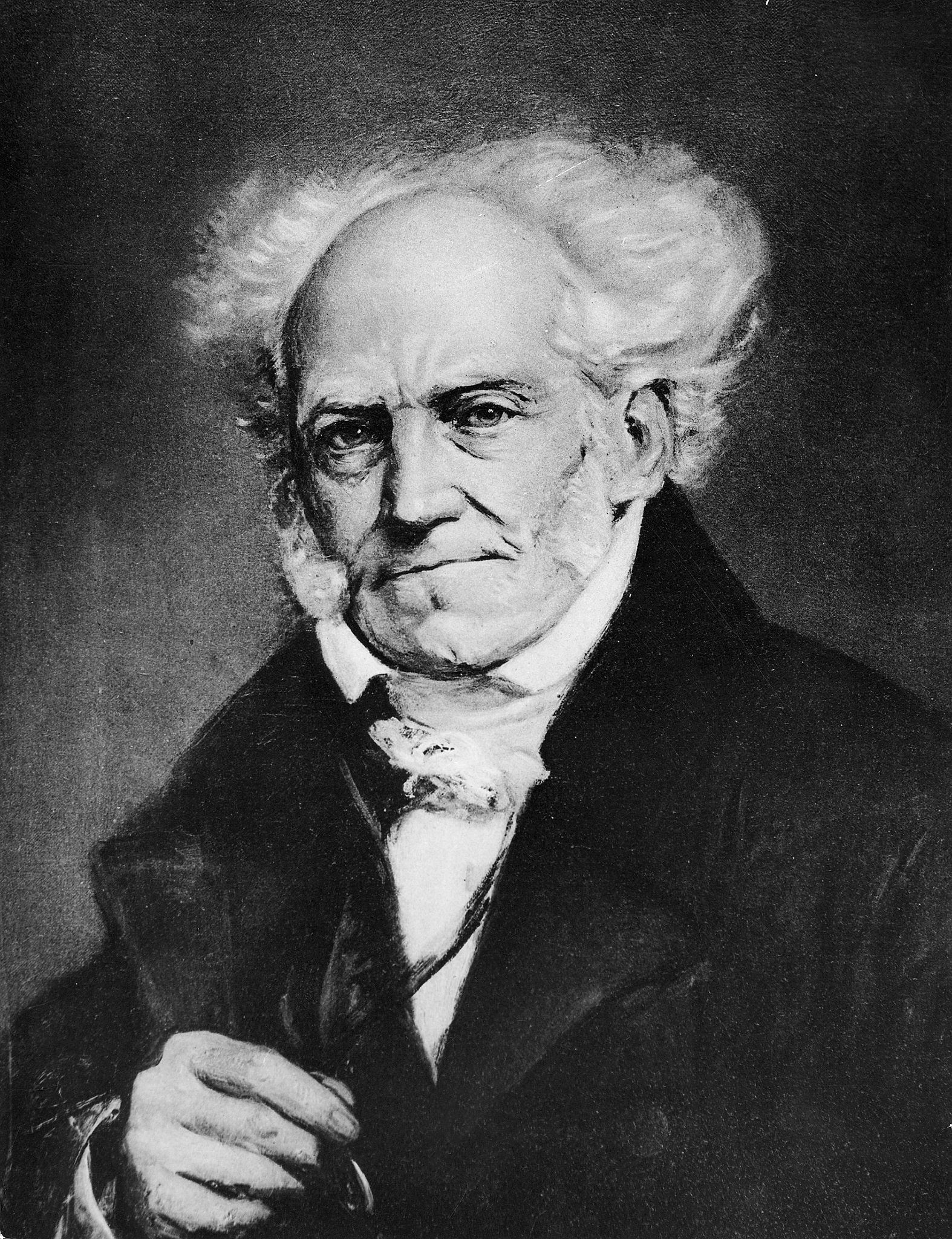
While Hegel traced a grand arc of spiritual progress, and Marx called for revolution and change, Arthur Schopenhauer (1788–1860) looked at the world and saw something altogether different:
misery.
To Schopenhauer, life was not a rational journey or a dialectical unfolding.
It was a relentless, blind force—driven by what he called the Will.
This Will is not something noble or divine.
It is irrational, unconscious, and insatiable.
It moves through us in the form of hunger, desire, ambition, and fear—and it never stops.
No matter what we achieve, we want again.
No matter what we understand, we remain restless.
The moment desire is fulfilled, boredom follows.
And so, life swings endlessly between suffering and emptiness.
In his masterpiece The World as Will and Representation, Schopenhauer paints a picture of reality not as a meaningful design, but as a cosmic illusion—where the mind creates a coherent image of a world that, at its core, is meaningless and hostile to human happiness.
He believed that reason, science, and even technological advancement did little to reduce human suffering.
If anything, they amplified it—by heightening awareness without resolving pain.
Where Hegel saw freedom evolving through history, and Marx sought liberation through action, Schopenhauer saw only disillusionment.
And his answer wasn’t progress or resistance—but withdrawal.
The closest thing to peace, he argued, comes from denying the Will—through aesthetic contemplation, compassion, and sometimes, quiet renunciation.
Toward the Existential Turn
By the end of the 19th century, continental philosophy had traced the full arc of modern uncertainty: From the promise of reason, to the struggles of society, to the pain of the self. It revealed a deeper crisis—not political or scientific, but existential. A crisis of meaning. Of identity. Of freedom.
And as the world entered the fractured 20th century, philosophy would once again shift. This time, it would speak not through systems—but through solitude. Not through reason—but through rebellion.
A new wave was coming. A philosophy that would speak not in neat arguments, but in blood, absurdity, and the raw experience of being human.
>> Next Article : Phenomenology
 Eksistensialisme.com