It all began with a belief: that logic could save the world, that science would usher in enlightenment, that human reason was a torch bright enough to burn away all darkness. This was the grand dream of modern philosophy. But as philosophy turned inward in the 20th century—more personal, more fractured—a new wave of thinkers began to ask: are we merely replacing old gods with new idols?
In 1784, Immanuel Kant wrote a now-legendary essay titled What Is Enlightenment? In it, he urged humanity to emerge from its “self-imposed immaturity”—our dependence on dogma, tradition, and external authority. Reason, he claimed, was the path to freedom. Dare to know (sapere aude), said Kant, and the chains of superstition would fall.
And for a while, it seemed the world listened.
Monarchies gave way to republics. Revelation was replaced by reason. Churches were emptied; laboratories filled. Even capitalism emerged as the rational offspring of economic logic and Enlightenment thinking.
But beneath this new freedom, a subtler form of servitude began to emerge—a devotion not to gods, but to numbers, systems, and efficiency. Humanity, in its pursuit of rational order, began to lose something older, wilder, more fragile: itself.
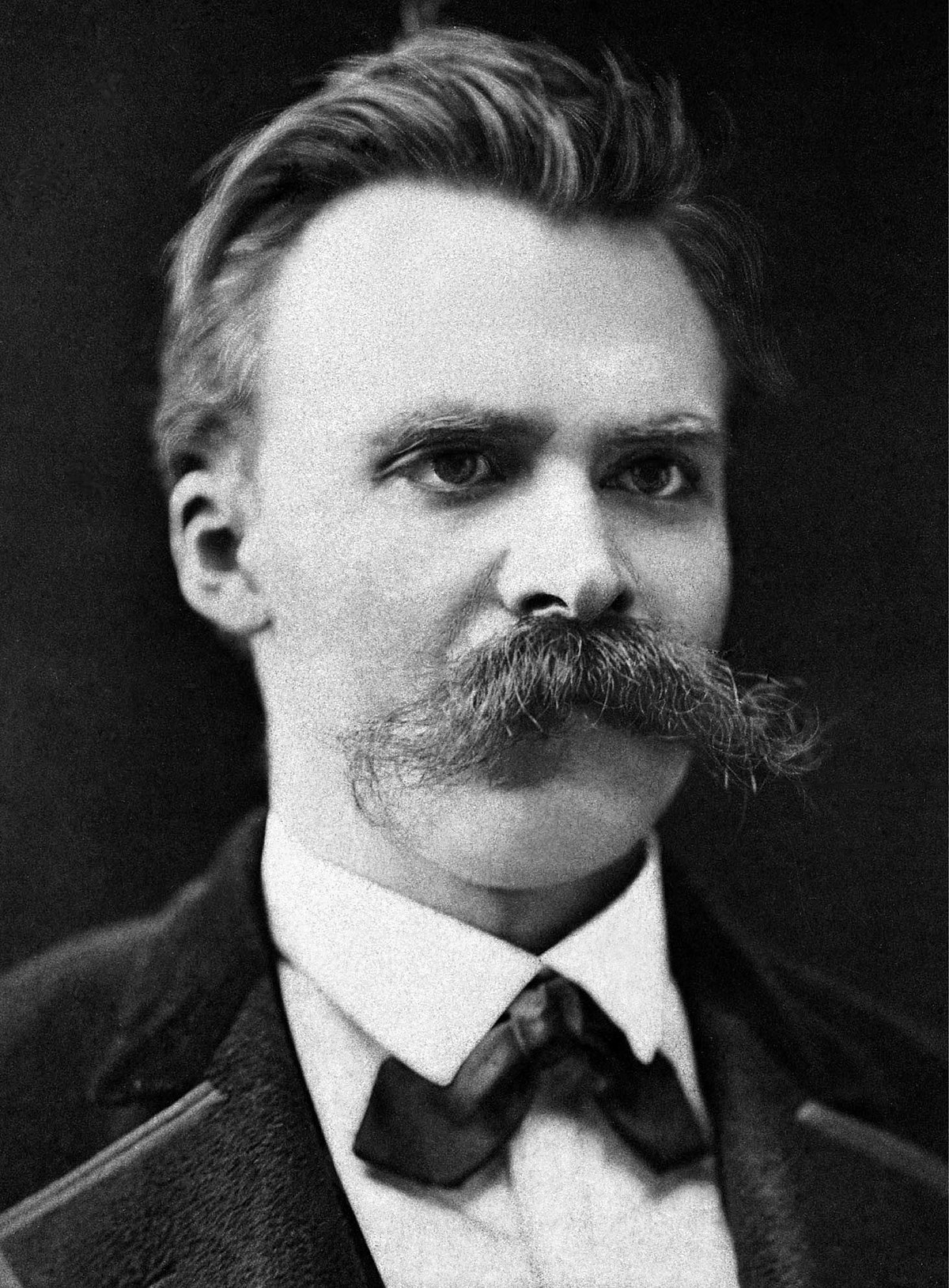
Few saw this danger more clearly—or more furiously—than Friedrich Nietzsche. While others celebrated the rise of science and reason, Nietzsche stood at the edge of modernity and sounded the alarm. The Enlightenment hadn’t liberated us, he argued—it had simply replaced one set of dogmas with another. Religion may have waned, but in its place stood new idols: progress, objectivity, morality, truth.
God is dead. God remains dead. And we have killed him. How shall we comfort ourselves, the murderers of all murderers? What was holiest and mightiest of all that the world has yet owned has bled to death under our knives: who will wipe this blood off us? What water is there for us to clean ourselves? What festivals of atonement, what sacred games shall we have to invent? Is not the greatness of this deed too great for us? Must we ourselves not become gods simply to appear worthy of it?
Section 125 of Friedrich Nietzsche’s The Gay Science
This was not a triumphant cry—it was a eulogy. Without God, without the transcendent values once held sacred, what was left? In tearing down the heavens, Nietzsche feared, modernity had left a vacuum. And into that vacuum rushed emptiness, disorientation, and the slow decay of meaning.
Where others saw rationality as salvation, Nietzsche saw it as yet another illusion—colder, more mechanical, and perhaps even more dangerous. In his eyes, modern philosophy hadn’t ended metaphysics; it had simply dressed it in a lab coat.
Nietzsche’s critique marked the beginning of a philosophical shift—away from universal truths, and toward individual experience. His suspicion of grand narratives and fixed values inspired a more skeptical current in philosophy, one that questioned not only religion but also the modern faith in progress, reason, and objectivity. In Germany, this critical spirit gave rise to continental philosophy, a tradition that pushed back against the clarity and structure of analytic thought. From within this tradition emerged phenomenology, a radical return to lived experience—laying the groundwork for existentialism. But even within existentialism, differing views on meaning, freedom, and faith would eventually fracture into something darker still: absurdism.
By the late 20th century, the dust of all these rebellions—against reason, against meaning, against certainty—settled into a new kind of skepticism. Postmodernism emerged not as a philosophy with a new answer, but as a sustained questioning of the answers that had dominated thought for centuries. If phenomenology re-centered experience, existentialism confronted meaning, and absurdism accepted its collapse, then postmodernism asked: What if even the way we ask these questions is already compromised?
Where Camus stopped at the silence of the universe, the postmodern thinkers took it further: they questioned the very language we use to describe the universe. They didn’t just ask what meaning is—they asked whose meaning, and at what cost it was constructed. If the absurd taught us that there was no script, postmodernism showed us that we might have been reading a forgery all along.
The Architects of Doubt
When the grand narratives of modernity began to crack—stories of reason, science, and moral progress—postmodern thinkers didn’t rush to replace them. Instead, they asked: what if the problem isn’t the story—but the act of storytelling itself?
Jean-François Lyotard was among the first to name the shift. In his 1979 book The Postmodern Condition, he declared the “incredulity toward meta-narratives.” What he meant was simple, but radical: the idea that any single, overarching explanation of reality—whether from religion, science, Marxism, or liberal democracy—can no longer be trusted. Not because they are all false, but because they pretend to be universal while masking the interests of particular groups. Lyotard didn’t deny the need for meaning; he simply rejected the monopoly on meaning. For him, knowledge was no longer a unified whole—it was fragmented, localized, plural.
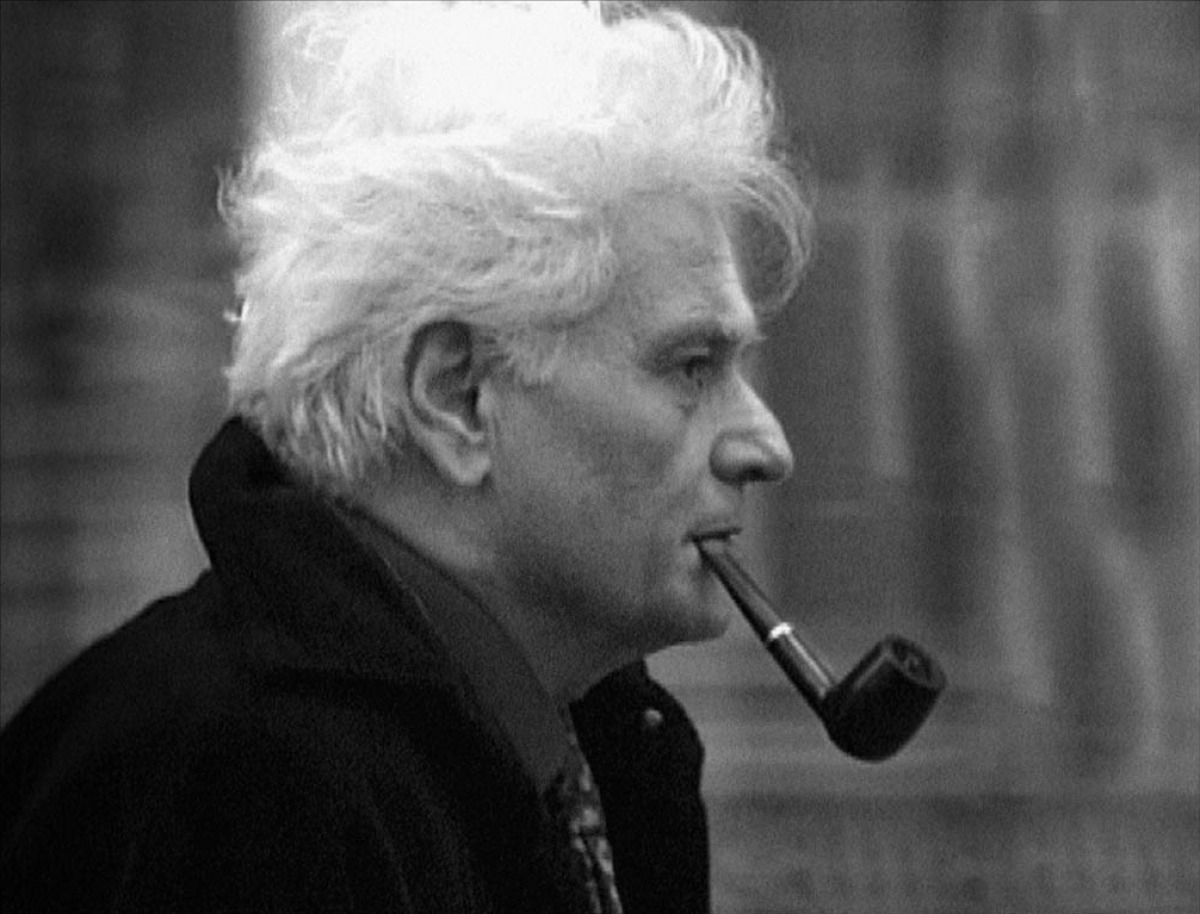
Where Lyotard questioned the authority of narrative, Jacques Derrida went further: he questioned the very language those narratives are built with. His method—deconstruction—was not about destroying meaning, but about exposing the instability beneath it. Language, Derrida argued, is a web of differences. Words mean what they mean only in relation to other words, and those relationships are never fixed. There is no final signified, no secure center. Every text contains contradictions, assumptions, and erasures—and these must be brought to the surface. The effect is unsettling: if language is always slipping, then meaning is never whole. Truth becomes not a destination, but an event—something endlessly deferred.
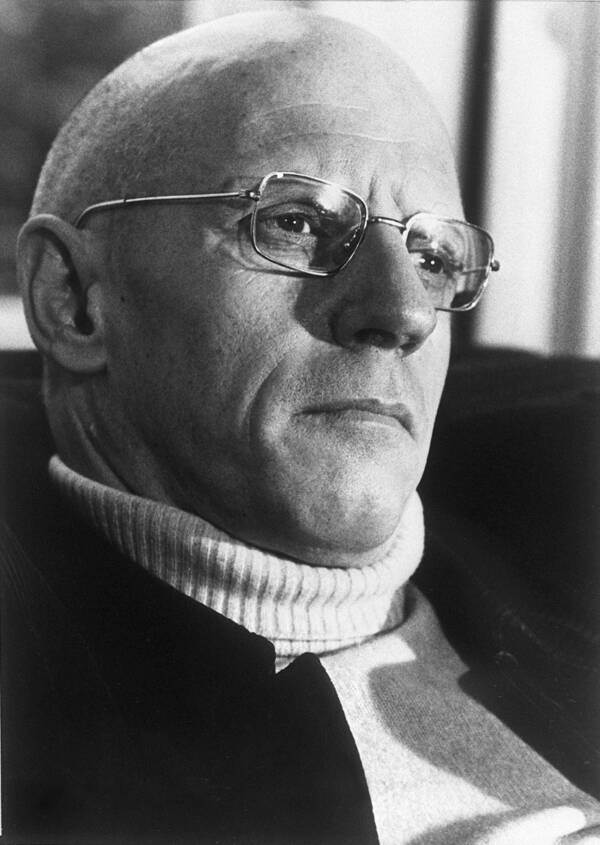
While Derrida showed that language is never neutral, Michel Foucault revealed that knowledge is never innocent. He didn’t ask, what is true? but rather, who decides what counts as truth—and why? In his genealogical studies of prisons, sexuality, medicine, and madness, Foucault uncovered how institutions define “normal” and “abnormal” not through discovery, but through classification, discipline, and surveillance. Power, he argued, doesn’t just repress—it produces knowledge. And that knowledge, in turn, shapes the way we see ourselves and each other. For Foucault, there is no truth outside of history. Even science, even reason, are entangled in systems of control.
If Foucault dismantled knowledge, Jean Baudrillard took aim at reality itself. In the age of mass media and consumerism, he argued, we no longer experience the real—we experience simulations. Images replace events. Representations replace facts. We don’t just watch news—we watch the spectacle of news. We don’t consume products—we consume signs that signal identity, lifestyle, belonging. In this world, the distinction between real and fake collapses. We live in a hyperreality—where Disneyland is more real than nature, and war coverage looks like a video game. For Baudrillard, truth doesn’t disappear. It becomes entertainment.
Together, these thinkers form a chorus of suspicion—not against truth itself, but against the tools we use to claim it.
Where modernity sought to master the world, postmodernism exposes the cost of that mastery: the voices silenced, the meanings excluded, the realities simulated.
It does not offer solutions. It opens wounds.
Not to heal, but to show that the scar was always there.
Relativism and Cultural Fatigue
Postmodernism began as an act of liberation. By tearing down the illusions of objectivity, it gave voice to the marginalized, questioned authority, and exposed the machinery behind what we call “truth.” But every revolution casts a shadow—and in the aftermath of dismantling, the question becomes: what now?
Without shared foundations, all truths become provisional. Without center, every voice becomes equal—and equally questionable. Without criteria, every claim becomes suspect, and every belief becomes a preference.
This is the birth of relativism—the idea that truth, meaning, and even morality are not universal, but contingent on perspective, culture, or context. At its best, relativism protects difference and promotes humility. But left unchecked, it risks sliding into paralysis. If everything can be deconstructed, then what can we stand for? If every truth is just one version among many, then what makes anything worth defending?
This leads to what some call cultural fatigue—a deep exhaustion not from oppression, but from ambiguity. In a world where every narrative is unstable, where every identity is fluid, where every institution is guilty—many people feel disoriented. They long not for simplicity, but for something solid. Something to believe in again.
Ironically, this has led to a return of moral certainty—not from traditional religion or philosophy, but from new ideological tribes. What some label as woke-ism (often pejoratively) is, in part, a cultural backlash within the postmodern moment: a desire to reassert ethical lines in a world where everything became blurred. Identity politics, cancel culture, and digital call-outs are not merely trends—they are attempts to reclaim moral clarity in the wake of philosophical skepticism.
But here lies the paradox: Postmodernism taught us to question power. Woke culture often exercises it. Postmodernism warned against universalizing truth. Woke culture often enforces it.
We are caught between the ruins of certainty and the hunger for justice. Between the loss of shared meaning and the rise of tribal narratives. Between the freedom of deconstruction and the fatigue of perpetual questioning.
So we stand, like Camus’ Sisyphus, facing the absurdity of meaning—but now with smartphones, algorithms, and hashtags. We scroll through simulations of outrage and virtue, wondering not what is real, but what is performative. Not what is true, but what is trending.
And maybe that’s where postmodernism leaves us:
not with answers, but with better questions.
If there is no absolute truth, how do we still tell the truth? If all stories are partial, how do we still speak with integrity? If meaning is constructed, how do we build it—without forgetting that others are doing the same?
In the aftermath of postmodernism, the challenge is not to rebuild old systems—but to live meaningfully in their absence.
To speak, even when words slip.
To care, even when certainty is gone.
To act, not with dogma—but with courage.
The Collapse into Nothing: Postmodernism’s Darkest Edge
For all its insights and provocations, postmodernism doesn’t end with playful irony or liberating pluralism. At its deepest—and perhaps most disturbing—level, it questions not only truth, but the very capacity of human beings to create value or meaning at all.
What begins as critique slowly spirals into despair.
If all meaning is constructed, then all meaning is unstable.
If every truth is relative, then no truth can hold.
And if every story can be deconstructed, then even the story of being human is subject to erasure.
Postmodernism, in its most radical form, does not merely reject old systems—it abandons the project of constructing any new ones. It suggests that the world, and humanity itself, may be too damaged to repair. What remains is not a map, but a ruin. Not progress, but a slow fading.
Michel Foucault, in The Order of Things (1966), captured this sentiment with unsettling clarity. Reflecting on the collapse of foundational concepts like knowledge, truth, and identity, he offered a vision not of rebirth, but of extinction:
Man is an “invention of recent date” that will soon be “erased,
like a face drawn in the sand at the edge of the sea.”
Foucault, The Order of Things, 1966
There is something both poetic and chilling in that image—a wave washing over the very idea of humanity, erasing it without violence, without drama. Just silence. Just disappearance.
In this vision, Nietzsche’s declaration that “God is dead” finds its sequel.
If the divine no longer provides meaning, and if reason fails to replace it, what remains?
For Nietzsche, the death of God created a vacuum—one that might be filled by new values, a revaluation of all things. But for postmodernism’s most extreme voices, there is no such revival. There is only the twilight of all idols—the slow, inevitable fading of not just our myths, but of ourselves.
This is the dark horizon of postmodern thought:
Not liberation from old constraints, but a collapse into nihilism.
Not playful irony, but existential fatigue.
Not the end of old beliefs, but the end of belief itself.
And that is perhaps the most haunting legacy of postmodernism:
It dismantles so thoroughly that it leaves nothing behind.
No meaning. No center. No self.
Just questions. Echoes. And a shore where even the trace of our face disappears.
And yet, from that silence, something begins to shift. A new generation, no longer obsessed with ultimate truths or grand theories, starts asking a different kind of question—not what is true, but what works? Not what should we believe, but how should we live? In the absence of guarantees, they turn to the ground beneath their feet. To daily choices. To action, connection, and consequence. Meaning, once something to be discovered, now becomes something to be made—together, imperfectly, and in motion.
References:
- Stanford Encyclopedia of Philosophy’s entry on postmodernism
- Wikipedia Page on Postmodernism
- Explaining Postmodernism by Stephen R.C. Hicks
- Philosophize This! on Postmodernism
>>> Next Article : Philosophy Today
 Eksistensialisme.com