
Humanity began its story as just another species—no more special than the other primates. Today, we dominate life on Earth, build machines, and gaze toward the stars with plans of going beyond. How did we get here? What’s our story?
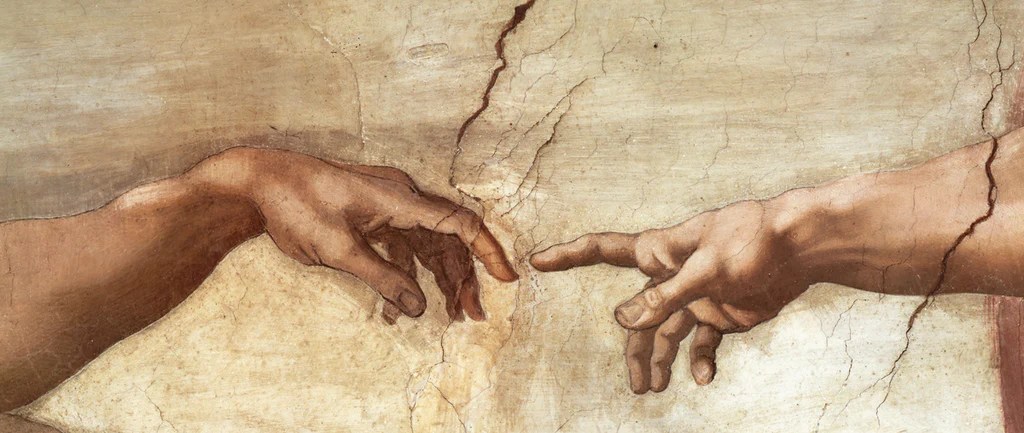
In 1968, at the height of the space race between the United States and the Soviet Union, director Stanley Kubrick released a film unlike anything the world had seen: 2001: A Space Odyssey.
It didn’t begin with rockets or spaceships.
It began in the African savanna, long before history, when a group of pre-human apes raised their faces toward the sky—briefly, almost accidentally—as if trying to imagine what might exist beyond the stars.
That moment passed quickly. Their minds weren’t yet ready for wonder.
There were more immediate concerns: hunger, predators, survival.
But everything changed the day the monolith appeared.
A smooth, black, perfectly symmetrical slab—something utterly unlike anything they had ever seen. It stood silently in the middle of their territory, without explanation. No one knew where it came from, what it was, or why it had come. And yet, it radiated an impossible sense of power.
Faced with something so alien, so pure, the apes experienced something new.
Awe. Terror. Curiosity.
One by one, they approached. First to stare. Then to reach out, flinching in fear. Then to touch, tap, strike. Some began to guard it like a sacred object. Others coveted it. Others still wanted to destroy it. Conflict was born—not because of understanding, but because of mystery.
And then, something extraordinary happened.
Faced with their limitations, one of them changed the rules.
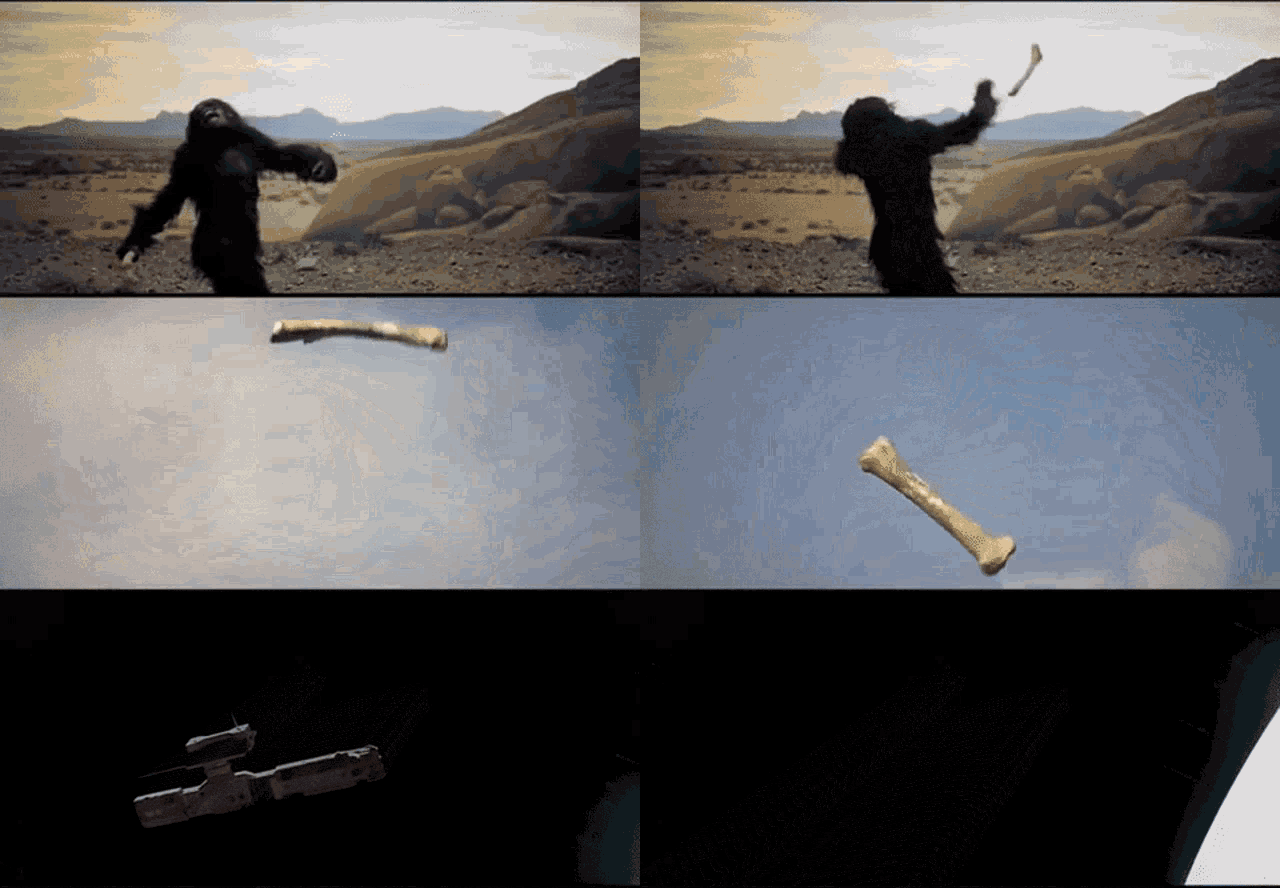
Gripping the bone of a fallen animal, one ape discovered he could use it not just as a tool—but as a weapon. For the first time in this fictional history, the ancestors of humanity mastered their environment. They didn’t just adapt.
They invented.
Kubrick captured this moment with one of the most iconic cuts in cinema history:
The ape throws the bone into the sky—
and it becomes a spaceship.
A million years of evolution, leaping forward in a single frame.
It was a metaphor not just for technology, but for consciousness. For the moment when a species stopped merely surviving—and began imagining.
The Animal Who Asked Why
Long before we launched satellites, crossed oceans, or etched poems into stone, we were just one of many. A bipedal primate wandering the African savannas—vulnerable, curious, and completely unremarkable.
According to scientists, the story of Homo sapiens began roughly 200,000 years ago. But back then, we weren’t alone. We shared the Earth with several other human species—our evolutionary cousins. Among the most famous were Homo erectus, the first long-distance traveler, and Homo neanderthalensis, the Neanderthal, whose bones once bore the marks of strength and fire.
We all came from the same ancient lineage. A shared ancestor who emerged some 2.5 million years ago—likely in East Africa—and who began the long, staggering crawl toward sentience.
But today, only we remain.
The rest—Neanderthals, Denisovans, Homo floresiensis—are gone.
What happened?
There are theories. Some blame climate—ice ages and rapid environmental shifts that erased habitable zones. Others offer a darker view: conflict, competition, even extinction by the hands of Homo sapiens. Archaeologists have found fractured skulls, burned bones, and signs of violence across prehistoric sites.
Whatever the truth, one fact remains: humanity is now a single-species story.
That’s not just a scientific curiosity. It’s a philosophical provocation.
Why us?
What made us different?
For tens of thousands of years, we were just another thread in the food web. An upright primate, fragile in tooth and claw, huddled near the fire, trying not to become prey. We didn’t dominate. We adapted. Slowly. Quietly. Almost forgettably.
And yet, something changed.
Over time, Homo sapiens began to migrate farther than any other human species had dared. We crossed deserts, glaciers, and oceans. We entered every known ecosystem and made it ours. From Arctic tundras to Pacific islands, we didn’t just survive—we settled.
But this didn’t happen overnight. It wasn’t a single leap. It was a series of barely perceptible steps—so gradual that even scientists still argue over how it happened at all.
Still, there were moments. Turning points. Sparks.
The first was walking.
Bipedalism seems unremarkable now. But for a primate, walking on two legs was revolutionary. It freed the hands—not just for gathering, but for crafting. Tools. Weapons. Symbols. It changed how we saw the world. Literally. Upright, we could see farther, and perhaps, dream farther.
But upright walking didn’t make us human.
Fire did.
The mastery of flame wasn’t just about light or warmth. It was the moment we began to bend the forces of nature to our will.
Fire let us cook. And cooked food changed everything.
It meant less energy spent digesting. Fewer parasites. Smaller jaws. Shorter intestines. More nutrients, faster. The human gut shrank—and the brain grew.
The calories that once went to chewing now powered memory, imagination, and speech. Around the fire, language began to flourish. And with language came story. With story came myth. With myth came meaning.
And perhaps for the first time, around the flickering glow of shared heat, we asked:
Why are we here?
Not in the grand cosmic sense. Not yet.
But something close.
Something like:
Who are we? What comes next?
We weren’t just surviving anymore.
We were beginning to narrate our survival.
The animal who once raised its face to the stars now asked what the stars meant. And it wouldn’t stop asking.
The Rise of Storytellers
Humans were never the strongest in the forest. No claws, no fangs, and too slow to hunt alone. But at some point in our early history, this fragile species lit a flame—not just to warm the night, but to ignite something far greater: a new relationship with nature.
When early Homo sapiens discovered fire, they didn’t just survive—they transformed. Cooking made food easier to digest, freeing energy once spent on digestion to nourish the brain. Around that flickering light, the human mind began to stretch, to imagine, to ask.
But the true spark of our story came not from muscle or tool. It came from something more subtle.
According to historian Yuval Noah Harari, what set Homo sapiens apart from every other species was not strength, not speed—but fiction.
Roughly 70,000 years ago, a cognitive revolution occurred. Humans began to speak not only of what they could see, but of what they could imagine. Spirits. Ancestors. Gods. These stories weren’t mere superstition. They were tools—shared myths that allowed humans to cooperate in groups larger than family or tribe.
This was the beginning of something unprecedented: collective meaning.
No other species had done this. Chimpanzees could warn each other of danger. Wolves could coordinate a hunt. But only humans could believe in things that didn’t exist—and act as if they did.
The idea of the divine. The code of honor. The promise of tomorrow.
These shared beliefs—these fictions—became the foundation of cooperation. People who had never met could fight side by side, farm together, share a fire. All they needed was a story they believed in.
And when humans began to migrate—leaving the savannas of Africa for the coasts of Asia, the forests of Europe, and eventually the shores of Australia and the Americas—they didn’t just carry tools or fire.
They carried meaning.
They carried stories.
It wasn’t strength that made us the dominant species on Earth. It was imagination, spoken aloud, and believed together.
From Gathering to Growing
For most of human history, we wandered.
We moved with the seasons, followed herds, gathered roots and berries, drank from rivers, and slept under stars. Life was uncertain, but it was also free. The world was open, and the earth itself provided—sometimes generously, sometimes not.
But around 12,000 years ago, something shifted.
In scattered corners of the globe—Mesopotamia, China, Mesoamerica, the Nile Valley—humans made a quiet yet monumental decision: to stay.
They began to plant.
They began to herd.
No one knows exactly why. Perhaps a drought forced their hand. Perhaps a few seeds scattered near a campsite began to grow. But slowly, hunting and gathering gave way to something more deliberate: agriculture.
It wasn’t an instant transformation. Farming was hard. It demanded discipline, calendars, storage, and backbreaking labor. It made diets less diverse, lives more sedentary, and bodies more prone to disease.
But it offered one thing no nomadic life could promise: surplus.
With more food than needed for survival, not everyone had to hunt or harvest. Some became builders. Others became storytellers. Artisans, priests, warriors, rulers. Specialization bloomed. And so did inequality.
Villages turned to towns.
Towns turned to cities.
And cities became the birthplaces of civilization.
Writing followed—first as a tool to track grain, debts, and laws. But then, as a way to pass on stories, encode traditions, and give memory to things the human voice could not carry alone. With writing came history. With cities came government, religion, and empire.
And once again, shared stories were the glue.
To live together in growing numbers, humans needed more than tools. They needed trust. They needed order. And nothing binds strangers together more effectively than belief.
Belief in gods.
Belief in kings.
Belief in borders.
Belief in the invisible threads that hold a society together.
And so, the fictions evolved—no longer spirits of the forest, but laws, currencies, flags, and scriptures. Myths became institutions. Stories became systems.
The Agricultural Revolution fed our bodies.
But it also changed our minds.
We stopped seeing ourselves as part of nature—and began to see ourselves as its master.
It was the beginning of permanence. But also, the beginning of longing—for the days when the world was wilder, and perhaps, simpler.
Kingdoms, Codes, and Cost of Order
As harvests grew and villages thickened into cities, humans began building more than just homes—they built hierarchies.
Not everyone farmed. Some ruled. Others recorded. Many obeyed.
Power, once shared across kinship groups, became centralized. A man with a larger granary, a sharper sword, or the ear of the gods could now command thousands. And to keep order among growing populations, humans did what they always did best:
We told stories.
Stories about divine right. About chosen bloodlines. About order written into the fabric of the universe.
But now, those stories weren’t just passed around fires—they were carved into stone.
In ancient Mesopotamia, the Code of Hammurabi laid out laws in orderly rows: rules for marriage, theft, trade, and justice. “An eye for an eye,” it read—not because the law was fair, but because it was legible. Predictable. Stable.
Order was the new god. And writing became its priest.
Hieroglyphs in Egypt, cuneiform in Sumer, oracle bones in China—all emerged not to express inner thoughts, but to serve the machinery of state: to count, to tax, to govern.
Where once the story of the tribe had been oral and alive, now it was frozen in ink. History, quite literally, was being written by the victors.
At the same time, human settlements were no longer bound by river valleys. Trade routes stretched across deserts and seas. Cities rose from the Indus to the Andes. Languages merged. Goods moved. Ideas migrated.
But so did violence.
Every kingdom dreamed of permanence. Every ruler sought legacy. And so, walls were built. Armies marched. Empires clashed.
In their wake, they left wonders: pyramids, ziggurats, stone temples aligned with the stars. But they also left scars: slavery, war, conquest.
And yet, despite the blood and empire, something else was quietly unfolding.
Humanity was learning to live together—across distance, across difference.
We had begun to build not only with bricks, but with meaning.
We forged identities.
We mapped the stars and the soul.
We wrote the first songs, inscribed the first prayers, codified the first doubts.
We asked not only how to survive—but why we exist at all.
The Prophet and The Sacred
As cities grew into kingdoms and kingdoms into empires, something ancient stirred in the hearts of their people—a longing that granaries and gold could not satisfy.
It wasn’t enough to have laws. People needed meaning.
They needed to believe that suffering was not random, that justice was more than vengeance, that death was not the end.
And so began one of the most transformative chapters in the human story: the age of the sacred.
Somewhere in the desert sands of Egypt, a pharaoh named Akhenaten closed the temples of old gods and worshipped a single sun. In the hills of Judea, prophets spoke of a covenant between a people and their unseen God. In India, seekers turned inward, meditating under trees, whispering about karma, dharma, and the cycles of rebirth.
Then, in the 6th century BCE—almost simultaneously, across continents—something astonishing happened.
Historians call it the Axial Age, a time when spiritual revolutions erupted in different corners of the world, as if humanity had collectively paused to ask: What does it mean to live a good life?
In China, Confucius taught that harmony begins not with the heavens, but with how one treats their parents. In India, the Buddha abandoned his palace, sat beneath a Bodhi tree, and returned with a truth so simple it burned: life is suffering—but not without a path out.
In Persia, Zarathustra preached of a cosmic battle between truth and falsehood. In Greece, Socrates wandered the city like a mirror, reflecting people’s ignorance back to them—until it cost him his life.
And in a quiet province of the Roman Empire, a carpenter’s son named Jesus gathered a few fishermen and outcasts and began to speak of a kingdom not built on wealth or weapons, but on love.
He healed the sick, turned away the powerful, and told people that God was not a distant ruler but a father. That even the meek could inherit the earth. That the last could be first. And for this, he was executed—crucified like a criminal.
But his death wasn’t the end. It was the beginning of a story that would reshape the world.
From a persecuted sect of Jewish rebels, Christianity rose to become the spiritual foundation of the Western world. It didn’t spread with armies, at first—but through letters, through stories, through martyrs who sang hymns while facing lions in the arena.
Then, in a twist of history, the empire that killed Jesus would one day crown him Lord. Rome fell, but the church remained. And in cathedrals built with the bones of empires, people gathered not for kings—but for Christ.
Christianity gave Europe its moral compass, its art, its sense of time and eternity. It shaped laws, inspired revolutions, and bound communities together. Even today, long after belief has faded for many, the echoes remain: in holidays, in language, in the idea that all lives have equal worth.
But Christianity was not alone.
Faith stirred across every continent.
From the chants of monks in Tibet to the call to prayer echoing over Jerusalem, from sacred fires in Zoroastrian temples to ceremonies under the open skies of the Andes—human beings found in the sacred a mirror and a map.
Religion, like everything humans touched, became institutional. The same texts that offered mercy also justified wars. The same temples that taught compassion demanded obedience. The same prophets who challenged kings were later turned into tools of kings.
Faith inspired poetry—but also persecution.
And yet, through the contradictions, something held.
People found in these spiritual traditions a shared compass, a reason to gather, to build, to care, to mourn.
We were no longer just surviving.
We were searching.
But the story didn’t end in the temple.
As cities rose and scriptures spread, another spark began to flicker—one that questioned the old answers and sought new truths in numbers, in experiments, in machines. The age of belief would give way to an age of reason, and with it, a revolution not of the soul, but of the world itself. The gods would retreat into silence, and in their place, we would build engines.
And once again, we would tell ourselves a new story:
Not of creation—but of control.
The next chapter of our collective story begins with steam.
>>> Part 2
 Eksistensialisme.com
Leave a comment