Prometheus stole fire from the gods and gave it to humans—not just to warm our bodies, but to ignite our minds. For that, he was chained and punished for eternity. Yet the fire endured—and it spread. We built cathedrals to reach the heavens, then machines to break the sky. The divine was no longer something we waited for. We began to replicate it.
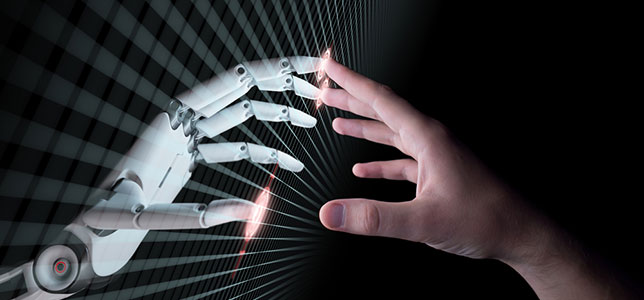
For centuries, religion shaped how humans understood the world—and their place within it. The heavens told stories. The Earth was still, created for us. Disease was punishment, lightning a sign, history the unfolding of divine will.
But even inside monasteries, something else was stirring. Monks copying manuscripts began to notice patterns in the stars. Artisans tinkered with lenses that bent light in strange ways. Slowly, a new kind of curiosity emerged—not just to worship the world, but to understand it.
In the 16th century, a Polish astronomer named Copernicus proposed a dangerous idea: what if the Earth wasn’t the center of the universe? His quiet publication at the end of his life was like a whisper that cracked the ceiling of belief.
A few decades later, Galileo Galilei raised a telescope and confirmed the suspicion: the heavens were not fixed, nor flawless. Jupiter had moons. The Sun had spots. And the Earth—long considered the axis of creation—was just another planet in motion. For this, he was summoned by the Church and forced to recant, kneeling before power. But the idea had already escaped.
Science, as it came to be known, wasn’t born to destroy religion—it rose out of a deeper desire to seek truth. It asked not just what is sacred, but what is real. Not just who made the world, but how it works.
From that hunger for understanding came a revolution—not with fire and sword, but with formulas and experiments. Isaac Newton described gravity, the invisible thread tying apples to trees and planets to stars. Kepler mapped planetary orbits. Leeuwenhoek discovered tiny life in a droplet of water. Nature, it turned out, was not just enchanted—it was intelligible.
Then, in 1859, Charles Darwin shook the foundation of both science and faith.
His book, On the Origin of Species, proposed a radical idea: that life, in all its vast diversity, had not been created in one divine act—but had evolved over millions of years through natural selection.
It was not humanity that stood apart, designed in the image of the divine. It was humanity as a branch of the great evolutionary tree—a distant cousin of apes, shaped by adaptation, competition, and chance.
The impact was seismic.
To religious institutions, Darwin’s theory was not just controversial—it was existentially threatening. It implied that creation had no script, that life was not the result of intentional design, but of random mutation and survival of the fittest. That human beings, long believed to be the central characters in the cosmic drama, were in fact the products of blind natural forces—with no special exemption, no sacred beginning.
Some called it heresy. Others called it liberation.
Because if Darwin’s idea was true, it meant that our meaning would not be handed down from heaven—it would be built from the ground up. Earned. Discovered. Chosen.
It reframed everything. God, for many, became a metaphor. Humanity, for others, became more precious—because its uniqueness was not divine, but accidental, fragile, and therefore infinitely valuable.
Darwin didn’t set out to attack religion. But his work, like Copernicus before him, pulled another brick from the wall. And that wall—between faith and reason—was beginning to lean.
Alongside Darwin’s revolution came another: the rise of humanism.
If nature could be understood without kings or popes, perhaps society could too. If each mind could reason, then perhaps each person had worth—not by divine decree, but by their capacity to think, to speak, to choose.
The Enlightenment followed, lit by minds like Voltaire, Spinoza, Locke, and Mary Wollstonecraft. They asked dangerous questions: What is justice? What is freedom? Who decides?
Laws were rewritten. Monarchs trembled. The individual stepped out from behind the shadow of the sacred.
Religion didn’t vanish. It transformed. It adapted. Some saw it as metaphor. Others, as private faith. But something irreversible had happened: meaning had moved inward.
The sacred had taught us to look upward.
Science taught us to look outward.
But Darwin—and the revolution that followed—taught us something else.
To see ourselves not as chosen, but as possible. Not as the purpose of the universe, but as its consequence. No longer the center of creation, but a species shaped by chance, time, and adaptation.
It was a revelation as liberating as it was terrifying.
And perhaps that’s what made us finally ready to ask the next question:
Now that we are free to create meaning—what kind of beings will we choose to become?
It didn’t take long for the answer to appear.
It roared in furnaces. It hissed through pipes. It churned across the land in iron and smoke.
And so, a new mythology took root. One that no longer gazed upward to gods, but forward—to machines, to markets, to futures waiting to be built.
The Gospel of Growth
Once, we told stories about gods.
We gathered around firelight to speak of creation, destiny, and the will of higher powers. These myths anchored civilizations—offering structure to the chaos of existence and comfort in the face of the unknown.
But then came steam.
The Industrial Revolution didn’t just change how humans worked—it rewired what humans believed in. In the span of a few centuries, furnaces replaced altars. Gears replaced prayers. And productivity replaced virtue.
The myth of eternity was swapped for the promise of progress.
In factories that roared like titans, a new kind of religion took root. It didn’t promise salvation in the afterlife. It promised more output this quarter. The divine had a new name—Growth.
And like all powerful faiths, this new belief came with its own gods.
Money was the first—a shared illusion, as intangible as it was irresistible, yet powerful enough to move mountains. It needed no armies, no temples. Just belief. As long as people trusted its value, it could build empires or topple them.
Then came Capital, a restless spirit with no allegiance to land or language. It flowed across borders without passports or ethics, seeking only one thing: growth. It cared nothing for who held it, only that it multiplied.
Labor became the new sacred duty—measured not in prayers or sacrifice, but in hours and effort. It turned human time into fuel. Into hours clocked. Into sweat priced and purchased.
Productivity rose as virtue. No longer was goodness found in piety or kindness, but in efficiency—how much one could produce, how fast, how consistently, how cheaply.
And Credit, the most mysterious of them all, emerged as a promise not grounded in reality, but in faith. A whispered covenant between strangers, a belief that tomorrow would come, that debts would be repaid, and that the system would hold.
None of them were real in the way rivers or trees are real. But together, they became the invisible architecture of the modern world—powerful myths dressed in numbers, spreadsheets, and trust.
None of them were real in a physical sense. You couldn’t touch them, taste them, or pin them to a map. But their influence was undeniable. They moved entire empires. They organized humanity better than swords or scriptures ever had.
The cathedral of this new faith wasn’t built in stone, but in steel and soot. Its prophets were not priests, but economists. Its scriptures weren’t passed down—they were printed in ledgers, reports, and balance sheets.
And it worked. Astonishingly well.
Machines multiplied what hands once made. Trains stitched distant lands into single economies. Cities rose, glowing with electricity and ambition. For the first time, the average person had a chance—not to inherit wealth, but to manufacture it.
But every myth has its shadow.
The very system that created abundance also created disparity. As production grew, so did pollution. As wealth concentrated, so did power. The same steam engines that pulled humanity forward also left others choking in their smoke.
Still, we believed. Because belief wasn’t about truth—it was about order. And the economic myth was the most efficient order ever invented.
It taught people how to behave, what to strive for, and what to worship: Success. Speed. Scale.
Even time was no longer sacred—it became something to be optimized.
The old gods were patient. But the market was not. If religion once promised eternal life, now the economy promised infinite growth.
But humanity didn’t stop there.
As machines grew more powerful, the questions became louder: If we can make anything, what should we make? If we can have everything, why are we still empty?
The age of industry brought light to every corner of the globe—but it also cast new shadows. And in those shadows, a new myth was waiting.
It would not speak in steam or fire.
It would speak in code.
The Almighty Algorithm
The machine once roared with steam and steel. Now, it whispers in light.
As the 20th century turned, something quieter—yet more transformative—emerged from wires and screens: the digital revolution. And unlike the engines that once carved railways into continents, this one carved pathways into the human mind.
Where the industrial age had worshipped production, the digital age worshipped connection.
The internet did not just reshape how we worked—it rewrote how we knew, remembered, and imagined. For the first time in human history, nearly every language, idea, and identity could coexist on a single invisible plane. Borders blurred. Time zones collapsed. The stories of nations became threads in a single, tangled web.
And the economy—once powered by oil and labor—now ran on something intangible: data.
We began to measure reality in clicks. In pixels. In metadata. Information was no longer something we stored—it was something we were. Our preferences, our desires, our fears—all logged, processed, and translated into content.
And at the center of it all stood a new oracle: The Algorithm.
It did not judge, or ponder, or believe. It measured. It remembered everything. It predicted.
Not only what we wanted, but who we would become. Not just what we searched for, but what we didn’t know we needed—until it whispered it back to us, in tailored headlines and infinite scrolls.
The algorithm didn’t speak in words. It spoke in patterns—across language, culture, ideology. It flattened complexity into feedable chunks, made truth and fiction equally viral. Every click was a vote. Every scroll a confession.
And slowly, it began to replace something older.
Where once we looked to priests or philosophers for meaning, now we looked to the feed. Where once stories were passed down through sacred text, now they arrived in autoplay videos.
The internet became a new kind of cathedral—one where belief was not inherited, but optimized.
And just as we adjusted to this new rhythm, another threshold appeared.
Not just a new tool. But a new mind.
Artificial Intelligence.
At first, it translated languages. Suggested products. Finished our sentences. Then it began to create—poems, paintings, symphonies.
It learned faster than any child, made fewer mistakes than any adult. It did not sleep, forget, or complain. And in time, it began to do what we thought only we could:
It imagined.
What began as convenience now approached something uncanny. A mirror too perfect. A mind that reflected us, not as we were, but as we might be.
Like the gods once said, “Let us make man in our image.”
Now man said, “Let us make mind in ours.”
Some saw it as salvation. The final invention. The spark that would free us from toil and decay. Others saw it as a question we weren’t ready to answer.
The New Storyteller
In the beginning, we told stories to make sense of the unknown.
Now, we build machines to predict it.
We once painted gods into the stars—mighty beings who watched over our fate. But over time, our gaze turned downward, into the circuitry of machines and the code of life. The divine no longer lived in myth. It began to take shape in numbers.
And in this new age, the holiest relic is not a scripture or a relic.
It is data.
We live in a world where almost everything we do—what we read, where we go, what we buy, how fast our hearts beat—is collected, quantified, and stored. Our preferences are tracked. Our emotions predicted. Our choices nudged not by gods above, but by algorithms below.
This is the faith of the digital age.
Not religion. Not humanism.
But something new.
Dataism.
A philosophy that views the universe not as a grand narrative, but as a flow of information. A belief that the key to truth isn’t revelation or reason, but computation. That everything from love to leadership can—and should—be optimized.
According to this creed, the most rational decision is the one made by the system with the most data. The more we feed the algorithm, the better it knows us—sometimes more intimately than we know ourselves.
And we do so willingly.
We surrender privacy for convenience.
Autonomy for prediction.
Choice for personalization.
It starts with targeted ads. Then playlists. Then relationships. Then medical diagnoses. In time, the algorithm stops reflecting us—it begins shaping us. It becomes not just a mirror, but a compass.
We used to ask prophets for wisdom.
Now we ask search engines.
We used to pray for guidance.
Now we wait for updates.
And this is where Homo Deus begins—not with a leap in biology, but a shift in belief.
Once, we were Homo sapiens—the wise.
Now, we seek to be Homo deus—the divine.
We don’t wait for miracles.
We code them.
Gene editing. Neural implants. Artificial intelligence.
We rewrite the source code of our existence—not to honor the gods, but to replace them.
And then comes the threshold:
The Singularity.
A moment in which intelligence breaks free from its human creator.
Not a machine that serves us—but a mind that surpasses us.
A child of silicon that outgrows its parent.
A system that evolves beyond our comprehension, not over millennia, but in moments.
Self-improving. Self-replicating. Self-directed.
What happens when thought no longer belongs to us?
We’ve been here before—though not quite like this.
Once, Homo sapiens emerged as just one among many human species.
Now, a new intelligence stands at the threshold.
One not born of biology, but built of code.
Will it be our tool—or our heir?
Will we merge with it, evolve alongside it, or be rendered obsolete by it?
Is this the next chapter in human evolution—or the epilogue?
Not long ago, we were the miracle.
The species that broke from instinct and reached for meaning.
Now we must ask—can we remain the storytellers…
when the story begins to write itself?
And Yet, We’re Still Writing.
Human history has always been a story of stories.
From tribal myths and divine commandments
to constitutions, markets, and machines—
we created fiction to make sense of the unknown.
Each era birthed its own narrative,
each generation carried it forward,
believing not because it was true,
but because it gave us something to live by.
But now, for the first time, the pen may be slipping from our hands.
We are no longer just telling the story.
We are becoming the story.
Just as ancient gods once shaped man from clay,
we now sculpt silicon in our own image—
only to discover that it reflects us more precisely
than any mirror of stone, myth, or language ever could.
And in that reflection, we seek not only knowledge,
but transcendence.
In 2001: A Space Odyssey,
Captain Dave Bowman defeats HAL 9000—not with superior intelligence,
but with human persistence.
He crawls through circuitry,
disconnects wires with trembling hands—primitive, mortal, fragile.
And yet, he overcomes.
He evolves.
He becomes the Starchild:
an echo of what we might become—
not ending, but ascending.
In Homo Deus, Yuval Noah Harari imagines a future
where humans no longer die—
not because we’ve reached paradise,
but because we’ve digitized the soul.
We’ll conquer aging, eliminate disease,
even upload consciousness into code.
And when that day comes,
we may no longer need gods.
Because we will be gods.
But this is not a story of triumph.
It is the story of a species that never stopped imagining.
That walked upright not just to move, but to wonder.
That tamed fire, built cities, sent machines to the stars— and still felt small beneath them.
We don’t know what comes next.
We may evolve into something unrecognizable.
We may destroy ourselves before we get the chance.
Or—we may create a new myth that carries us further still.
Whatever the future holds, one truth remains:
The greatest story we ever told was not about heaven, kings, or money.
It was this:
That meaning is not found.
It is made.
And for now,
we’re still writing.
 Eksistensialisme.com
Leave a comment