Have you ever come face to face with death?
Let’s try a thought experiment. Imagine you’re not sitting safely in your room right now. Instead, you find yourself in the middle of a war zone. Gunfire cracks the air, explosions shake the ground. You crouch in the mud, heart pounding. At any moment, your life could end.
No time to reflect. No space for comfort. Just one raw, piercing awareness: I’m still alive—at least for now.
In that moment, life stops being an abstract idea. It becomes immediate, physical, real. You feel your breath. You hear your heart. And you realize how strange it is that most days, you barely notice you’re alive at all.
We forget, because we’re not supposed to live like this every day. But death, when it draws near, has a way of sharpening everything. It strips away distraction. It forces us to look, not away, but in.
And then comes the question: What have I done with the time I’ve been given?
The Tragedy of Comfort
Most of us don’t ask this question often. Thoughts of death are unsettling, so we avoid them. We bury ourselves in routine. We delay the book, the trip, the apology, the confession, the dream. We keep telling ourselves there’s more time. That we’ll start tomorrow.
And yet, deep down, we know the truth: death is not a distant event. It’s not a cinematic ending waiting at the final act. It can arrive anytime, anywhere, uninvited.
And when it does, it rarely waits for us to be ready.
The Mayfly’s Day
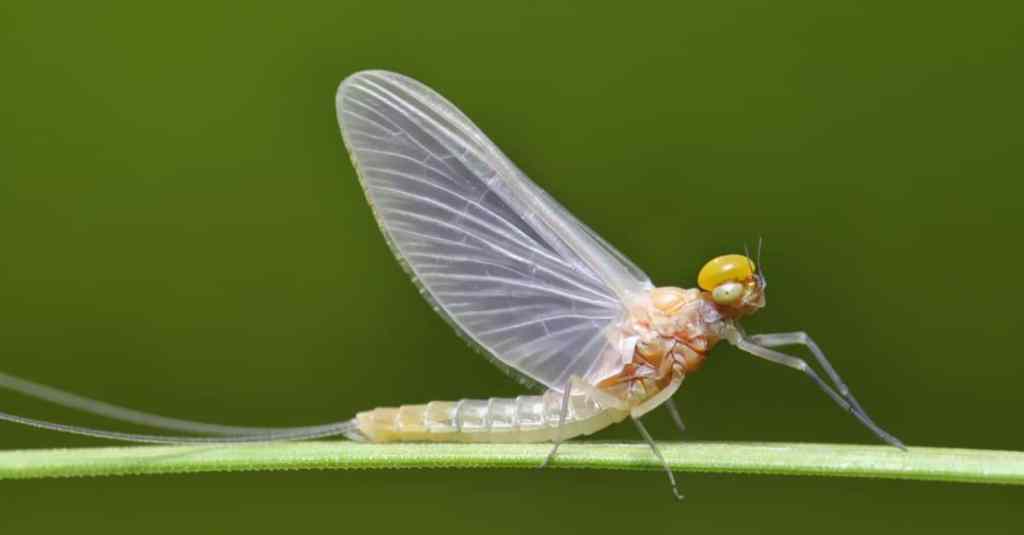
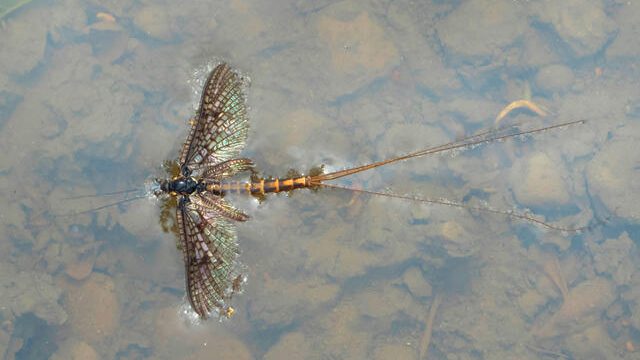
Let’s shift the lens. Enter the mayfly—a tiny creature with the shortest adult lifespan on Earth. Once it reaches maturity, a mayfly lives only about 24 hours. So brief is its time that it doesn’t even develop a mouth. It doesn’t need to eat. It’s not here to savor—it’s here to fulfill a single purpose: reproduce, and die.
If we imagined the mayfly’s life as a single day, it might look like this:
00:00 – The egg hatches in water. 04:00 – The larva begins its underwater life. 10:00 – It feeds and grows. 14:00 – It prepares for transformation. 18:00 – The pupa rises. 20:00 – The adult breaks free, wings unfurl. 22:00 – It finds a mate. 24:00 – Its life ends.
Now imagine: what if you lived like the mayfly—but with the full awareness you carry now? Knowing you had only one day to live, what would you do with your hours?
Would you waste them in fear, paralyzed by the inevitability of death? Or would you say: There is no better time to live than now.
Is Time Ever Enough?
Maybe 24 hours feels too short. So how about a butterfly—three days? A mosquito—two weeks? A dog—15 years? A Galapagos tortoise—100?
Would more time truly make a difference?
Perhaps the question isn’t how much time we have, but what we do with the time that is already slipping through our fingers.
Time stretches and contracts according to meaning. An hour waiting in traffic is not the same as an hour spent watching someone you love sleep. In that sense, a mayfly might live more authentically in one day than a human does in eighty years—if it fulfills its purpose without hesitation.
Nature offers clues. Evolution didn’t give the adult mayfly a mouth—because it doesn’t need one. It has no time to eat. Its biology answers the question of its purpose.
But humans? We were given more. Not just mouths, but minds. Language. Memory. Imagination. Ethics. If evolution shaped us this way, maybe our task isn’t just to survive, but to seek, to create, to feel.
Our purpose might not be encoded in instinct, but in the things we choose to care about.
The Absurd Courage to Live
Do mayflies have existential crises? Probably not. But we do. We are the only species burdened with the knowledge of our own mortality. And yet, as Camus noted, we go on. We wake up, brush our teeth, make coffee, fall in love. Even when we know it will all end.
That is our rebellion.
Camus believed that to live, knowing full well the absurdity of life, is an act of defiance. We don’t need eternal meaning. We don’t need to be promised paradise. It’s enough to lift our heads, to breathe, and to choose to live anyway.
Like a mayfly who takes flight at dusk, knowing full well that darkness is near.
The Beauty of Impermanence
What makes something beautiful? That it does not last.
Every moment, because it will never happen again, becomes sacred. A touch. A look. A shared joke that fades into laughter. Even grief, in its rawness, reminds us that something mattered enough to be mourned.
Existentialists like Nietzsche, Heidegger, and Sartre understood that death was not something to fear, but something that gives urgency to life. As Heidegger wrote:
“If I take death into my life, acknowledge it, and face it squarely, I will free myself from the anxiety of death and the pettiness of life—and only then will I be free to become myself.”
We are not here forever. But we are here now.
So the question isn’t how long we live. It’s how deeply.
Even if the sky is fading, even if night is near, will we still dare to fly?
Like the mayfly, with no time to waste, and nothing left to fear.
 Eksistensialisme.com
Leave a comment