
Sementara tentara Nazi Jerman berpatroli di jalanan Paris, Jean-Paul Sartre dan Simone de Beauvoir menghabiskan berjam-jam di Café de Flore, tenggelam di antara asap rokok dan percakapan yang seolah tak pernah berakhir. Dari meja kecil di kafe itu lahir salah satu gagasan paling berpengaruh dalam filsafat modern: Manusia tidak dilahirkan dengan makna. Manusialah yang harus menciptakannya.
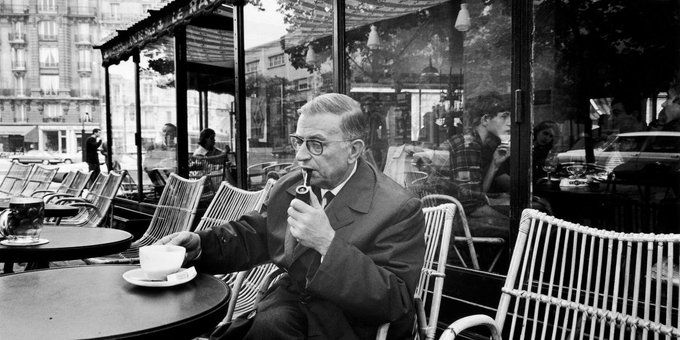
Paris di awal 1940-an, kafe bukan sekadar tempat minum kopi. Café de Flore, Les Deux Magots, dan La Rotonde adalah kantor, ruang kelas, sekaligus rumah kedua bagi para pemikir. Di sanalah mereka membaca, menulis, berdebat, bertemu teman, murid, seniman, dan sesama intelektual yang sedang mencoba memahami dunia yang berubah dengan cepat.
Paris pada masa itu dipenuhi tokoh-tokoh yang kelak menjadi legenda. Pablo Picasso sesekali terlihat di meja yang tidak jauh dari mereka. Ernest Hemingway pernah menjadikan kafe-kafe yang sama sebagai tempat menulis dan berdiskusi. Penyair, pelukis, musisi, jurnalis, hingga aktivis politik saling bertukar gagasan di antara denting gelas dan asap rokok yang memenuhi ruangan.
Namun di pusat lingkaran itu ada sesuatu yang baru.
Beberapa tahun sebelumnya, Jean-Paul Sartre baru kembali dari Berlin setelah mempelajari fenomenologi. Ia merasa telah menemukan cara baru untuk memahami manusia. Jika para filsuf sebelumnya sibuk membicarakan hakikat, esensi, atau sistem pemikiran yang abstrak, fenomenologi mengajaknya kembali kepada pengalaman hidup yang konkret.
Bagi Sartre, ini seperti membuka pintu yang selama ini tersembunyi.
Filsafat tidak lagi harus dimulai dari konsep-konsep besar. Ia bisa dimulai dengan mengamati seorang pelayan kafe, sebuah koktail, atau pengalaman sehari-hari tentang kecemasan, cinta, rasa malu, dan pilihan-pilihan yang harus diambil manusia.
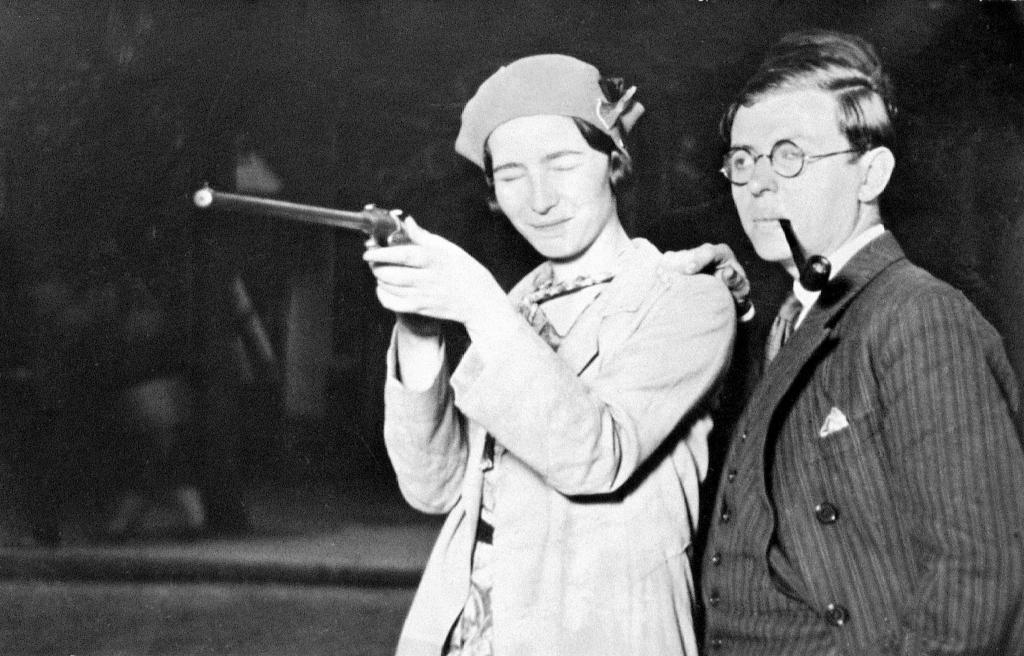
Berbagi meja dengannya, Simone de Beauvoir juga melihat potensi yang sama. Bersama-sama mereka mulai mengembangkan cara berpikir yang menempatkan kebebasan manusia di pusat perhatian. Mereka mendiskusikannya di kafe, di apartemen, saat berjalan kaki melintasi Paris, bahkan melalui surat ketika terpisah oleh perjalanan dan perang.
Hubungan mereka sendiri menjadi bagian dari eksperimen itu.
Mereka menolak pernikahan dan banyak aturan sosial yang dianggap wajar pada zamannya. Di apartemen mereka di Rue Bonaparte, Sartre dan Beauvoir sering bekerja berdampingan sejak pagi hingga malam. Suara mesin tik menjadi latar sehari-hari. Mereka saling membaca naskah, mengkritik argumen, dan memperdebatkan hampir setiap ide yang mereka tulis.
Beauvoir dapat menghabiskan berminggu-minggu di Roma menyelesaikan sebuah manuskrip. Sartre dapat bepergian ke Marseille bersama murid, sahabat, atau kekasih lainnya. Namun percakapan di antara mereka tidak pernah benar-benar terputus. Mereka terus menguji gagasan satu sama lain dan, dengan caranya sendiri, terus memilih satu sama lain berulang kali.
Yang mengikat mereka bukanlah janji tradisional, melainkan apa yang pernah disebut Sartre sebagai “a necessary solidarity” — sebuah solidaritas yang dipilih secara sadar, bukan diwariskan oleh norma atau kewajiban.
Perang tidak melemahkan keyakinan itu. Ia justru mempertajamnya.
Sementara Paris hidup di bawah pendudukan Nazi, Sartre dan Beauvoir terus berdiskusi tentang politik, seni, perlawanan, dan tanggung jawab manusia. De Beauvoir bercerita tentang seorang perempuan yang ditangkap karena menyebarkan pamflet politik. Sartre membagikan kisah tentang siaran radio bawah tanah yang ia dengar secara diam-diam. Di antara secangkir kopi, lembaran manuskrip, dan percakapan yang berlangsung hingga larut malam, mereka terus kembali pada pertanyaan yang sama:
bagaimana manusia harus hidup di dunia yang tidak menawarkan makna yang pasti?
Namun jauh sebelum kafe-kafe Paris, sebelum Beauvoir, sebelum perang, dan sebelum ketenaran, Jean-Paul Sartre hanyalah seorang anak kecil yang tumbuh tanpa ayah dan menemukan dunia pertamanya di antara rak-rak buku.
Hidup Tanpa Arahan
Jean-Paul Sartre lahir di Paris pada tahun 1905. Ayahnya meninggal ketika ia masih bayi sehingga nyaris tidak meninggalkan kenangan apa pun. Ia dibesarkan oleh ibunya, Anne-Marie, dan kakeknya, Charles Schweitzer, seorang guru bahasa Jerman yang sangat mencintai sastra dan budaya.
Rumah itu dipenuhi buku.
Sejak kecil, Sartre tumbuh di antara perpustakaan, novel, dan percakapan intelektual. Ia membaca tanpa henti, menjadikan tokoh-tokoh dalam buku sebagai teman bermain, dan menghabiskan berjam-jam membayangkan dirinya hidup di dunia yang berbeda dari dunia nyata di sekelilingnya.
Namun di balik semua itu, ada kesepian yang diam-diam membentuk dirinya.
Sartre kemudian menggambarkan masa kecilnya sebagai kehidupan seorang “pangeran kecil yang dimanja”. Ia dikelilingi perhatian, tetapi juga hidup dalam dunia yang sangat terisolasi. Buku-buku memberinya kebebasan, sekaligus menjadi tempat perlindungan.
Ketika beranjak remaja, ia mengalami gangguan penglihatan yang membuat salah satu matanya hampir tidak berfungsi dan memaksanya memakai kacamata tebal. Penampilannya menjadi bahan ejekan. Sartre muda tumbuh dengan kesadaran yang tajam bahwa dirinya berbeda dari orang lain.
Alih-alih berusaha menyesuaikan diri, ia justru menjadikan keterasingan itu bagian dari identitasnya.
Pengalaman menjadi orang luar kelak akan menjadi salah satu tema yang terus muncul dalam pemikirannya.
Saat memasuki École Normale Supérieure, salah satu institusi akademik paling bergengsi di Prancis, Sartre segera dikenal karena kecerdasannya yang tidak biasa. Ia gemar berdebat, sering melanggar aturan, dan memiliki rasa ingin tahu yang nyaris tidak mengenal batas. Ia membaca filsafat, sastra, psikologi, dan politik dengan intensitas yang sama.
Di sana pula ia bertemu Simone de Beauvoir.
Hubungan mereka segera berkembang menjadi sesuatu yang lebih dari sekadar persahabatan. Mereka membaca buku yang sama, memperdebatkan ide yang sama, dan perlahan membangun keyakinan filosofis yang sama.
Namun pada akhir 1920-an, Sartre masih merasa ada sesuatu yang hilang. Ia tertarik pada filsafat, tetapi banyak tradisi filsafat yang ia pelajari terasa terlalu jauh dari kehidupan nyata. Terlalu abstrak. Terlalu sibuk membicarakan konsep, tetapi lupa pada pengalaman manusia yang konkret.
Jawaban yang ia cari datang dari Jerman.
Dari teman yang bercerita tentang seorang profesor bernama Edmund Husserl yang mengajak para pemikir untuk kembali kepada pengalaman itu sendiri.
“Back to the things themselves.”
Bagi Sartre, kalimat itu terasa seperti sebuah pintu yang akhirnya terbuka.
Pada tahun 1933, Sartre berangkat ke Berlin untuk mempelajari fenomenologi. Namun seperti banyak hal dalam hidupnya, ia melakukannya dengan caranya sendiri.
Sebagian mahasiswa filsafat yang tertarik pada fenomenologi biasanya pergi ke Freiburg untuk belajar langsung dari Edmund Husserl. Sartre tidak. Ia memilih Berlin.
Di sana ia menghabiskan waktunya berpindah-pindah antara perpustakaan, toko buku, kafe, dan bar. Ia membaca karya Husserl, Martin Heidegger, dan Emmanuel Levinas dengan rakus, sambil berusaha memahami mengapa begitu banyak filsuf muda Jerman merasa bahwa fenomenologi telah mengubah segalanya.
Ia tidak pernah bertemu Husserl.
Namun justru dari kejauhan itulah ia menemukan sesuatu yang sangat berharga. Ia mengagumi Husserl, tetapi tidak pernah benar-benar menjadi pengikutnya. Yang menarik baginya bukan ketelitian metode fenomenologi, melainkan kemungkinan baru yang dibukanya. Kemungkinan untuk menjadikan kehidupan sehari-hari sebagai titik awal filsafat.
Berlin memberinya lebih dari sekadar teori.
Kota itu sedang berada di ambang perubahan besar. Krisis ekonomi, ketegangan politik, dan bangkitnya Nazisme menciptakan suasana yang sulit diabaikan. Di tengah semua itu, Sartre mulai mengembangkan filsafat baru yang tidak terpisah dari kehidupan nyata.
Namun filsafat baru itu tidak akan diuji dalam ruang kuliah.
Ia akan diuji oleh perang.
Filsafat dari Kehidupan
Ketika Perang Dunia II pecah pada tahun 1939, Sartre dipanggil untuk bertugas di militer Prancis sebagai pengamat cuaca. Tidak lama kemudian, setelah kekalahan Prancis, ia ditangkap oleh pasukan Jerman dan menghabiskan hampir satu tahun sebagai tawanan perang di sebuah kamp dekat Trier.
Dunia yang selama ini ia kenal menghilang seketika.
Tidak ada lagi kafe Paris. Tidak ada Beauvoir. Tidak ada kebebasan untuk pergi ke mana pun ia mau. Yang tersisa hanyalah pagar kawat berduri, rutinitas yang monoton, dan kehidupan yang diatur oleh orang lain.
Namun justru di tempat itulah Sartre mulai melihat sesuatu dengan lebih jelas.
Selama ini ia memikirkan kebebasan sebagai persoalan filsafat. Kini ia mengalaminya sebagai kenyataan hidup.
Manusia memang tidak memilih banyak hal. Kita tidak memilih tempat lahir, keluarga, zaman, bahkan kadang-kadang nasib yang menimpa kita. Sartre menyebut kondisi-kondisi yang diberikan itu sebagai facticity.
Tetapi bahkan di tengah keterbatasan itu, masih ada sesuatu yang tidak dapat sepenuhnya dirampas.
Pilihan.
Kita tetap memilih bagaimana merespons keadaan. Kita tetap memilih untuk menyerah, bertahan, berharap, membenci, atau melawan.
Pengalaman sebagai tawanan perang memperkuat keyakinan yang kemudian menjadi inti filsafatnya: manusia selalu lebih besar daripada situasi yang menimpanya.
Setelah dibebaskan dan kembali ke Paris, Sartre mulai menulis karya terpentingnya, Being and Nothingness. Di dalamnya ia mengembangkan gagasan bahwa manusia tidak pernah sepenuhnya ditentukan oleh keadaan.
Kita memang terlempar ke dalam dunia yang tidak kita pilih. Tetapi kita selalu harus menentukan apa yang akan kita lakukan dengan kehidupan yang telah diberikan kepada kita.
Di sinilah Sartre mulai mengambil jarak dari Heidegger.
Jika Heidegger berusaha memahami makna keberadaan manusia, Sartre semakin tertarik pada konsekuensi praktis dari keberadaan itu. Baginya, pertanyaan terpenting bukan hanya apa artinya menjadi manusia, tetapi apa yang harus dilakukan manusia dengan kebebasan yang dimilikinya.
Dan di tengah perang, pendudukan, serta kebangkitan totalitarianisme di Eropa, pertanyaan itu terasa semakin mendesak.
Filsafat tidak lagi cukup hanya menjelaskan dunia.
Ia juga harus membantu manusia mempertanggungjawabkan pilihannya di dalam dunia tersebut.
“Freedom is what you do with what’s been done to you.”
Ketika dibebaskan pada tahun 1941 dan kembali ke Paris, Sartre bukan lagi orang yang sama.
Ia kembali bukan hanya sebagai filsuf, tetapi sebagai saksi. Saksi atas perang, pendudukan, dan rapuhnya kebebasan manusia ketika berhadapan dengan kekuasaan.
Ia mulai menulis dengan intensitas baru. Bukan hanya karya filsafat, tetapi juga novel, drama, esai, dan artikel politik. Baginya, gagasan tentang kebebasan tidak cukup dijelaskan. Kebebasan harus ditunjukkan, dipertanyakan, dipertahankan, dan dijalani.
Eksistensialisme tidak lagi sekadar teori.
Ia telah menjadi bentuk perlawanan.
Eksistensialisme di Panggung Sejarah
Paris, 1945.
Perang telah berakhir, tetapi kota itu masih dipenuhi bekas luka. Bangunan-bangunan yang rusak berdiri berdampingan dengan kafe-kafe yang kembali ramai. Orang-orang memenuhi jalanan, bukan hanya untuk merayakan kemenangan, tetapi untuk mencari cara memahami dunia yang baru saja selamat dari kehancuran.
Di tengah suasana itu, Jean-Paul Sartre kembali ke Saint-Germain-des-Prés.
Bersama Simone de Beauvoir, Maurice Merleau-Ponty, Albert Camus, dan lingkaran intelektual yang semakin besar, ia mendapati bahwa gagasan-gagasan yang sebelumnya hanya diperdebatkan di meja kafe kini menarik perhatian seluruh generasi.
Perang telah mengubah cara orang memandang hidup. Terlalu banyak kematian. Terlalu banyak ideologi yang runtuh. Terlalu banyak kepastian yang terbukti rapuh.
Banyak orang mulai mengajukan pertanyaan yang sama:
Bagaimana manusia harus hidup setelah semua yang telah terjadi?
Sartre menawarkan jawaban yang tidak nyaman.
Tidak ada makna yang menunggu untuk ditemukan.
Tidak ada takdir yang akan menunjukkan jalan.
Manusia harus memilih.
Dan karena itu, manusia harus bertanggung jawab.
Gagasan-gagasan tersebut segera menyebar jauh melampaui dunia akademik. Melalui novel, drama, esai, kuliah umum, dan diskusi di kafe-kafe Paris, eksistensialisme menjadi bagian dari percakapan budaya pascaperang. Ia tidak lagi hanya menjadi aliran filsafat.
Ia menjadi cara sebuah generasi memahami dirinya sendiri.
Seperti yang ditulis Sartre dalam Being and Nothingness:
“Human reality is nothing other than the ensemble of its acts.”
Kita bukan apa yang kita pikirkan.
Kita adalah apa yang kita lakukan.
Pada Oktober 1945, Sartre memberikan sebuah kuliah umum di Club Maintenant, Paris. Judulnya sederhana: L’Existentialisme est un Humanisme.
Eksistensialisme adalah Humanisme.
Tak seorang pun menduga apa yang akan terjadi.
Ruang kuliah penuh sesak. Orang-orang berdiri di lorong, berdesakan di pintu masuk, bahkan memanjat kursi untuk bisa mendengar. Perang memang telah berakhir, tetapi banyak orang masih mencari cara untuk memahami dunia yang baru saja selamat dari kehancuran.
Sartre menawarkan sebuah jawaban.
“Existence precedes essence.”
Eksistensi mendahului esensi.
Kalimat itu terdengar sederhana. Namun bagi generasi pascaperang, dampaknya terasa seperti ledakan.
Menurut Sartre, manusia tidak dilahirkan dengan tujuan yang telah ditentukan. Tidak ada cetak biru ilahi. Tidak ada hakikat tetap yang menentukan siapa diri kita. Kita ada terlebih dahulu, lalu membentuk diri kita melalui pilihan-pilihan yang kita ambil.
“Man first exists, encounters himself, surges up in the world, and defines himself afterwards.”
Bagi sebagian orang, gagasan ini terdengar menakutkan.
Bagi sebagian lainnya, justru membebaskan.
Jika tidak ada takdir yang menentukan hidup kita, maka tidak ada lagi tempat bersembunyi. Kita bertanggung jawab atas apa yang kita lakukan, atas siapa kita menjadi, dan atas dunia yang ikut kita ciptakan melalui tindakan-tindakan kita.
Kritikus menuduh Sartre menyebarkan nihilisme dan keputusasaan.
Sartre membalas bahwa mereka salah memahami pesannya.
Eksistensialisme bukan filsafat keputusasaan.
Ia adalah filsafat tanggung jawab.
Dan di Prancis pascaperang, pesan itu menemukan pendengarnya.
Dalam waktu singkat, eksistensialisme keluar dari ruang kuliah dan masuk ke kehidupan sehari-hari. Simone de Beauvoir mulai menulis karya-karya yang kelak mengubah cara dunia memandang perempuan dan kebebasan. Albert Camus mengembangkan filsafat absurditas dan pemberontakan. Drama, novel, majalah, dan kafe-kafe Paris dipenuhi perdebatan tentang pilihan, tanggung jawab, dan makna hidup.
Eksistensialisme bukan lagi sekadar aliran filsafat.
Ia telah menjadi suara sebuah generasi.
Sebuah generasi yang baru saja kehilangan banyak kepastian lama dan kini harus belajar hidup tanpa jaminan apa pun.
Apa yang ditawarkan Sartre bukanlah penghiburan.
Ia menawarkan sesuatu yang jauh lebih menuntut:
kebebasan.
Dari Kafe ke Jalanan
Kafe mungkin menjadi mimbar Sartre, tetapi ia tidak pernah puas untuk tinggal di sana.
Jika eksistensialisme awal berfokus pada kebebasan individu, sejarah segera memaksanya menghadapi pertanyaan yang lebih besar. Perang memang telah berakhir, tetapi ketidakadilan belum. Kolonialisme masih bertahan, kesenjangan sosial tetap menganga, dan ancaman perang baru mulai membelah dunia menjadi dua kubu besar. Pertanyaan tentang kebebasan tidak lagi hanya bersifat filosofis. Ia menjadi politis.
Sartre tidak menghindarinya.
Pada tahun 1945, ia bersama Simone de Beauvoir dan Maurice Merleau-Ponty mendirikan Les Temps Modernes, sebuah jurnal yang segera menjadi pusat kehidupan intelektual Prancis pascaperang. Di sana Sartre mengembangkan gagasan yang disebutnya engagement atau keterlibatan. Bagi Sartre, seorang penulis tidak dapat berpura-pura netral terhadap dunia yang sedang terbakar.
Filsafat, sastra, dan politik tidak lagi dapat dipisahkan.
“Man is nothing else
jean-paul sartre
but what he makes of himself.
But he is also what he makes of others.”
Melalui esai, artikel, drama, dan pidato publik, Sartre mulai berbicara tentang kemiskinan, kolonialisme, perang, rasisme, dan ketidakadilan sosial. Ia mendukung perjuangan kemerdekaan di berbagai negara jajahan, mengecam kekerasan kolonial Prancis di Aljazair, dan berkali-kali menggunakan ketenarannya untuk membela kelompok yang menurutnya tidak memiliki suara.
Posisi ini sering membawanya ke wilayah yang kontroversial.
Sartre tertarik pada Marxisme karena ia melihat bahwa kebebasan manusia tidak pernah berdiri di ruang hampa. Kita memang bebas, tetapi kita juga lahir dalam kondisi sosial, ekonomi, dan politik yang tidak kita pilih. Seseorang yang hidup dalam kemiskinan, penjajahan, atau penindasan menghadapi kemungkinan hidup yang berbeda dari mereka yang lahir dengan privilese.
Pertanyaan yang kemudian menghantuinya adalah: bagaimana kebebasan individu dapat dipertahankan tanpa mengabaikan kekuatan sejarah yang membentuk kehidupan manusia?
Selama bertahun-tahun Sartre mencoba menjembatani eksistensialisme dan Marxisme. Usaha itu mencapai puncaknya dalam Critique of Dialectical Reason, sebuah karya ambisius yang berusaha menunjukkan bahwa manusia tidak pernah sepenuhnya ditentukan oleh struktur sosial, tetapi juga tidak pernah sepenuhnya bebas darinya.
Manusia selalu hidup di antara keduanya.
Kebebasan dan situasi.
Pilihan dan sejarah.
Namun semakin jauh Sartre memasuki dunia politik, semakin sulit pula mempertahankan keseimbangan itu.
Ia sering bersimpati kepada gerakan-gerakan revolusioner yang menentang kolonialisme dan kapitalisme. Dalam beberapa kesempatan, ia bahkan cenderung menutup mata terhadap kekerasan atau kegagalan rezim yang mengatasnamakan revolusi. Para pengkritiknya menuduh bahwa filsuf kebebasan itu terkadang terlalu mudah memaafkan penindasan selama penindasan tersebut dilakukan atas nama tujuan yang dianggap benar.
Perdebatan itu bahkan merenggangkan hubungannya dengan Albert Camus.
Bagi Sartre, sejarah menuntut keberpihakan. Bagi Camus, keberpihakan tetap harus memiliki batas moral yang tidak boleh dilanggar. Perselisihan mereka pada akhirnya bukan sekadar perbedaan politik, melainkan perbedaan pandangan tentang bagaimana kebebasan harus dijalankan di dunia yang penuh ketidakadilan.
Meski demikian, tidak banyak filsuf abad ke-20 yang terlibat dalam kehidupan publik sedalam Sartre.
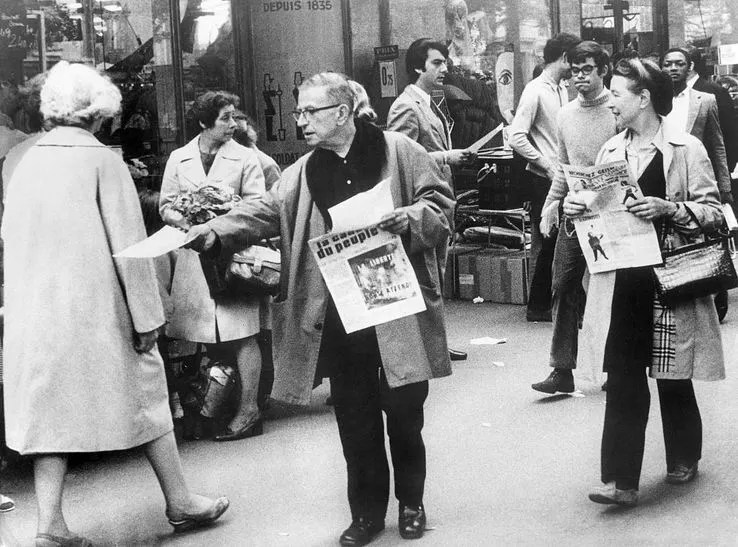
Ia turun ke jalan saat demonstrasi mahasiswa tahun 1968. Ia berbicara mendukung gerakan anti-perang Vietnam. Ia mengunjungi para aktivis, menandatangani petisi, menghadiri pertemuan politik, dan terus menulis hingga usia senja.
Ketika dianugerahi Hadiah Nobel Sastra pada tahun 1964, ia bahkan menolaknya.
Menurut Sartre, seorang penulis tidak boleh berubah menjadi institusi.
Ia ingin tetap bebas.
Benar atau salah, konsisten atau kontradiktif, Sartre menjalani filsafatnya bukan sebagai teori, melainkan sebagai praktik hidup. Ia menolak menjadi pengamat yang berdiri di pinggir sejarah.
Ia memilih masuk ke dalamnya.
Dan seperti semua orang yang memilih, ia harus menanggung konsekuensinya.
Rokok di atas Pusara
Pada tahun-tahun terakhir hidupnya, tubuh Sartre mulai menyerah. Penglihatannya memburuk hingga ia nyaris buta. Puluhan tahun menulis tanpa henti, merokok, bekerja hingga larut malam, dan terlibat dalam berbagai perjuangan politik meninggalkan jejak yang tidak bisa lagi diabaikan.
Namun bahkan ketika kesehatannya melemah, Sartre tidak pernah benar-benar meninggalkan dunia yang selama ini ia hadapi.
Ia tetap menulis, berbicara, menandatangani petisi, mengunjungi aktivis, dan mendukung berbagai gerakan yang menurutnya memperjuangkan kebebasan manusia. Ia menulis:
“Every word has consequences. Every silence, too.”
Jika eksistensialisme mudanya berpusat pada kebebasan individu, pemikiran Sartre di masa tua semakin bergerak menuju solidaritas. Kebebasan, baginya, tidak pernah menjadi proyek pribadi semata. Kebebasan selalu terkait dengan kehidupan orang lain.
Melalui semua perubahan itu, satu hal tetap konstan.
Simone de Beauvoir.
Selama lebih dari lima puluh tahun, mereka membaca naskah satu sama lain, mempertanyakan keyakinan masing-masing, dan menjalani kehidupan yang menolak banyak definisi konvensional tentang cinta dan hubungan. Ketika penglihatan Sartre mulai hilang, Beauvoir membantu membacakan dan mencatat pikirannya. Ketika tubuhnya melemah, percakapan di antara mereka tetap berlanjut.
Hubungan mereka tidak selalu sederhana.
Namun ia bertahan lebih lama daripada sebagian besar pernikahan, persahabatan, maupun aliansi intelektual pada zamannya.
Jean-Paul Sartre meninggal di Paris pada April 1980.
Lebih dari lima puluh ribu orang mengikuti prosesi pemakamannya. Mahasiswa, buruh, penulis, aktivis, seniman, dan orang-orang biasa memenuhi jalanan kota. Bukan pemandangan yang lazim untuk seorang filsuf.
Mungkin karena Sartre tidak pernah hidup seperti filsuf pada umumnya.
Ia menolak menjadi pengamat yang berdiri di luar sejarah. Ia memilih masuk ke dalamnya, dengan segala kontradiksi dan konsekuensinya.
Tidak lama setelah itu, Simone de Beauvoir menulis Adieux, sebuah memoir singkat tentang tahun-tahun terakhir Sartre. Di dalamnya ia mengenang sahabat, pasangan intelektual, sekaligus rekan seperjalanan yang telah menemaninya selama lebih dari setengah abad.
“His death separates our life. It breaks the six decades of our friendship. Nothing, not even death, can separate me from him.”
Enam tahun kemudian, Beauvoir dimakamkan di samping Sartre di Pemakaman Montparnasse.
Makam mereka sederhana.
Namun hingga hari ini, makam itu jarang sepi.
Para pengunjung meninggalkan tiket metro, batang rokok, catatan kecil, kutipan dari novel, atau secarik kertas berisi pikiran mereka sendiri. Bukan bunga untuk dikenang, melainkan jawaban untuk sebuah pertanyaan yang Sartre habiskan seumur hidup untuk mengajukannya:
Jika tidak ada makna yang diberikan kepada kita,
bagaimana kita akan hidup?
>> Lanjut ke Simone de Beauvoir

Tonton Video Terkait

